Fracture Treatment in Durban: What Happens After a Broken Bone?
Understand how fractures are assessed, when a cast or brace may be enough, and why some broken bones need urgent surgery.
What happens during the first assessment?
The immediate priorities are pain control, checking the skin and swelling, and confirming that circulation and nerve function are intact. The injured limb is usually supported before X-rays are reviewed.
Open wounds, severe deformity, loss of circulation, numbness or a high-energy injury need urgent hospital assessment. Do not eat or drink if emergency surgery may be required unless the treating team advises otherwise.
Does every fracture need surgery?
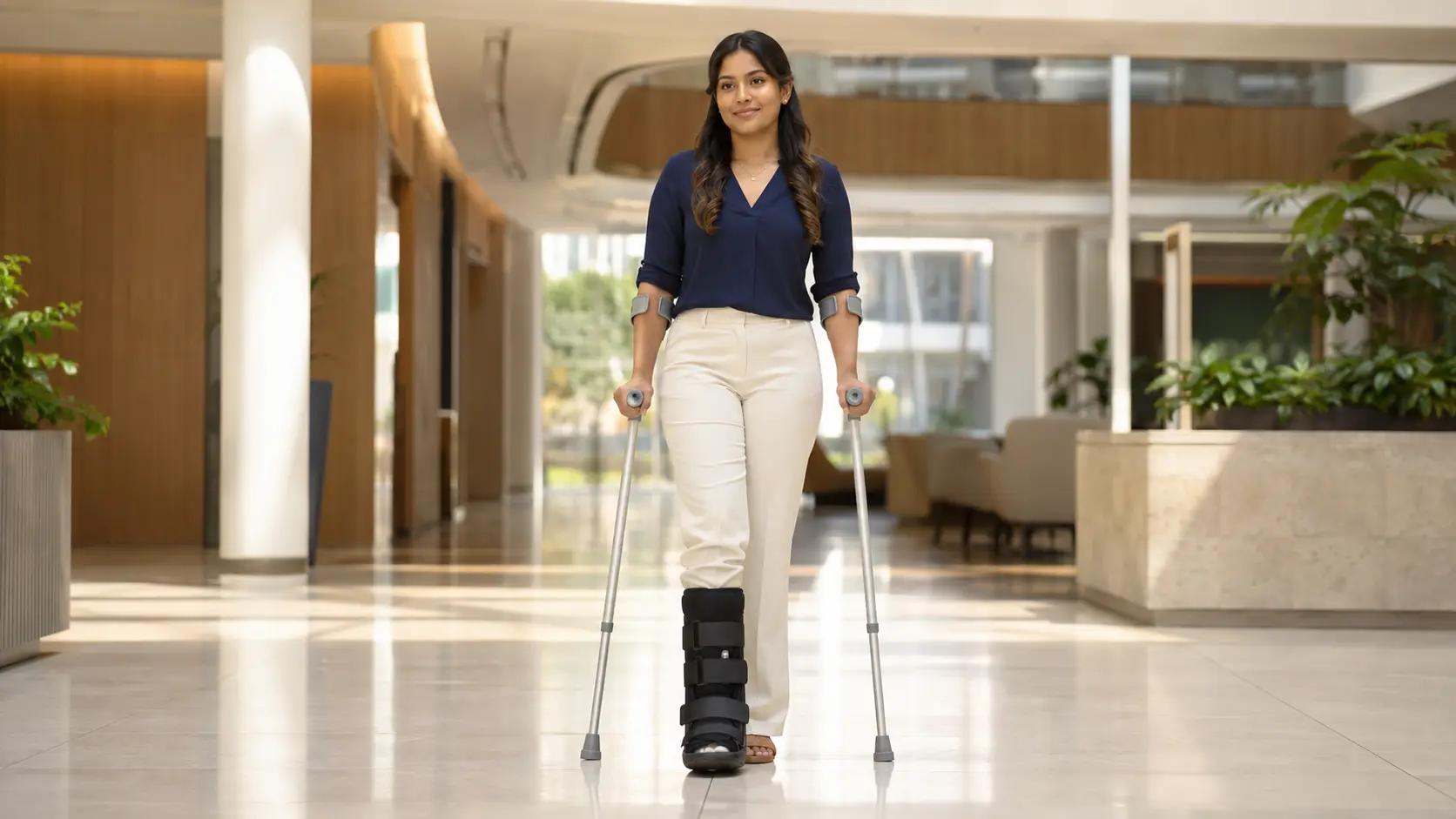
No. Stable fractures in an acceptable position may heal with a splint, cast, brace or moon boot and planned follow-up. Repeat X-rays may be needed because alignment can change as swelling settles.
Surgery is more likely when a fracture is displaced, unstable, enters a joint, threatens the skin or circulation, or cannot be held in a safe position. The goal is not simply to repair an X-ray—it is to protect healing, alignment and useful movement.
On-call and after-hours fracture care
Trauma forms a substantial part of our practice. Our surgeons participate in on-call and after-hours orthopaedic care across the hospitals where they practise, assessing acute fractures and coordinating urgent treatment when required.
Bring any X-rays, scan reports, medication lists and medical-aid details. If you are uncertain whether an injury can wait, contact the hospital emergency department rather than delaying care.
Common questions
Questions patients often ask.
How do I know if a fracture is an emergency?
Seek urgent care for an open wound, obvious deformity, severe uncontrolled pain, a pale or cold limb, new numbness or weakness, rapidly increasing swelling, or an injury involving major trauma.
Can I move a limb if I think it is broken?
Avoid repeatedly testing it. Support the limb in the position found, remove rings if swelling is developing, and obtain medical assessment. Do not try to straighten a deformed limb yourself.
Why might I need another X-ray later?
Swelling decreases and some fractures can shift during the first days or weeks. Follow-up imaging helps confirm that alignment remains acceptable and healing is progressing.
Sources and further reading
This guide is general educational information, not a diagnosis or personal medical advice. Treatment decisions require an individual assessment.