
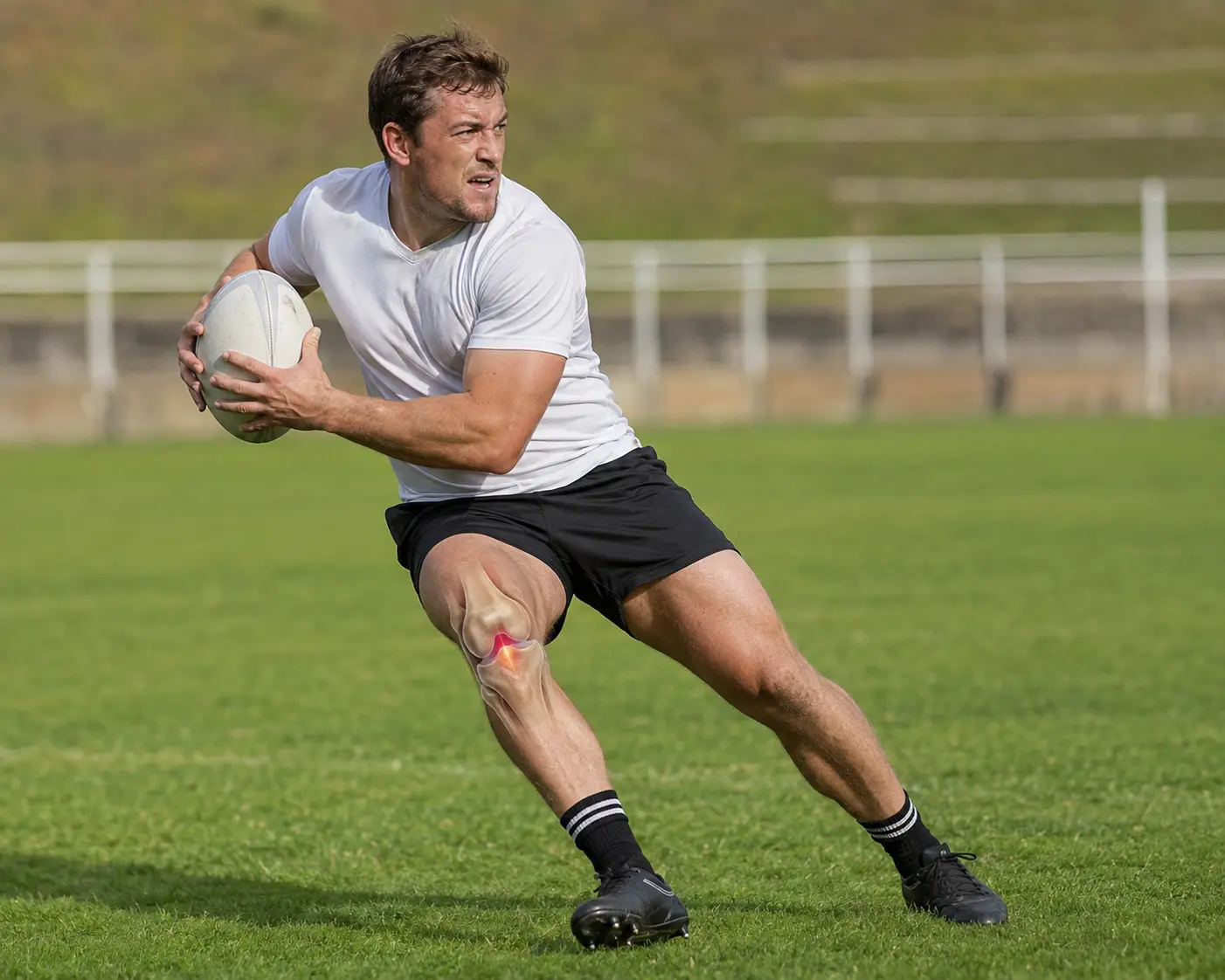
Understanding Knee Sports Injuries
What patients commonly notice
Injury to the ACL, MCL, PCL or LCL may lead to pain, swelling and a feeling that the knee is unstable. The exact pattern and severity can vary, so a clinical assessment is important before deciding on treatment.
Common symptoms
- A pop, immediate swelling or pain after injury
- Instability when changing direction
- Reduced movement and difficulty returning to sport
Causes and risk factors
There may be more than one contributing factor. Common possibilities include:
- Pivoting, sudden deceleration or awkward landing
- Direct contact or a blow to the knee
- Hyperextension or high-energy trauma
How is knee sports injuries assessed?
Assessment usually includes the pattern of pain or instability, examination of movement, swelling, alignment and ligament stability, and appropriate imaging. The findings are interpreted alongside your activity level and goals.
Treatment options
Treatment is matched to the diagnosis, symptom severity, general health and the activities you need to return to. Options may include:
- Early swelling control and structured rehabilitation
- Bracing for selected ligament injuries
- Reconstruction when persistent instability or activity demands justify surgery
Surgery is not automatically the first step. When it is considered, the likely benefit, alternatives and recovery requirements should be discussed clearly.
Common questions
Does every ACL or knee-ligament tear need surgery?
No. The injured ligament, degree of instability, associated damage and your activity goals all matter. Some isolated injuries can be treated successfully with structured rehabilitation and, where appropriate, bracing.
Can I walk on my knee after a ligament injury?
Weight-bearing advice depends on the injury pattern and whether a fracture or multiple ligaments are involved. Early assessment is important before returning to unrestricted walking or sport.
When can I return to sport after an ACL injury?
Return is based on healing, strength, movement, control and sport-specific testing rather than time alone. After reconstruction, rehabilitation commonly takes many months and should be progressed in stages.
This page provides general patient information and does not replace a consultation or personalised medical advice.