Understanding Herniated Disc
What patients commonly notice
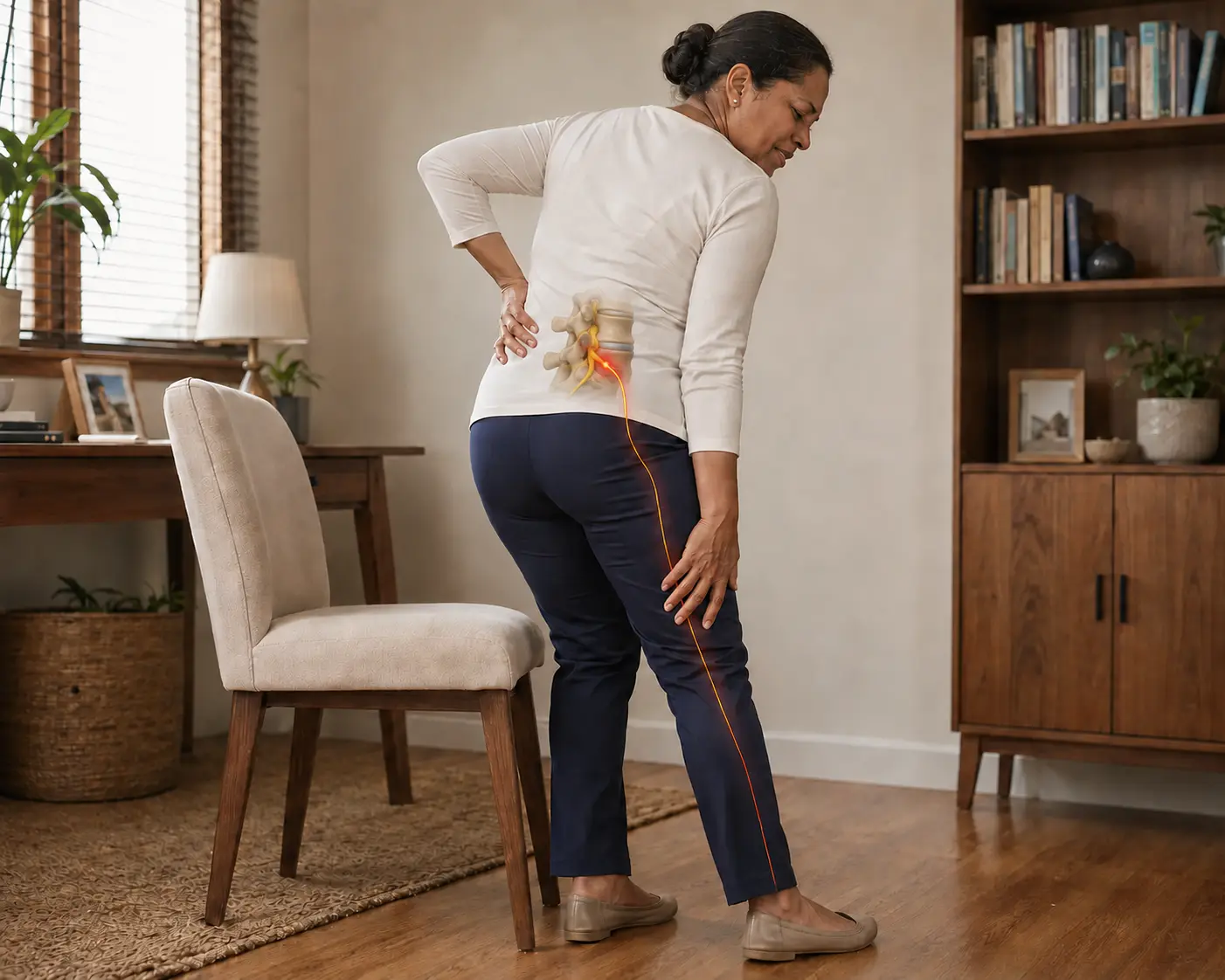
A spinal disc can bulge or rupture and irritate a nearby nerve, causing back or neck pain with symptoms into an arm or leg. The exact pattern and severity can vary, so a clinical assessment is important before deciding on treatment.
Common symptoms
- Pain travelling into an arm or leg
- Numbness, tingling or altered sensation
- Weakness in muscles supplied by the affected nerve
Causes and risk factors
There may be more than one contributing factor. Common possibilities include:
- Age-related weakening of the disc
- Lifting, twisting or a sudden load
- Less commonly, significant trauma
How is herniated disc assessed?
Assessment combines the symptom pattern with a neurological and musculoskeletal examination. Existing scans are reviewed and further X-rays, MRI or other tests are requested only where they are likely to change the treatment plan.
Treatment options
Treatment is matched to the diagnosis, symptom severity, general health and the activities you need to return to. Options may include:
- Maintain safe activity with medication and physiotherapy
- Selected nerve-root injection
- Decompression surgery for persistent pain or significant neurological deficit
Surgery is not automatically the first step. When it is considered, the likely benefit, alternatives and recovery requirements should be discussed clearly.
Common questions
Is a herniated disc the same as a slipped disc?
The disc does not literally slip out. Part of its inner material pushes through the outer layer and may irritate or compress a nearby nerve.
Should I stay in bed until the pain settles?
Prolonged bed rest is generally unhelpful. Safe, tolerable movement is usually encouraged, with activity adjusted to symptoms and any neurological findings.
Which symptoms require urgent assessment?
New bladder or bowel disturbance, numbness around the saddle area, rapidly worsening weakness, loss of balance or severe symptoms in both legs require urgent medical assessment.
This page provides general patient information and does not replace a consultation or personalised medical advice.