
In plain language
What is trigger finger release?
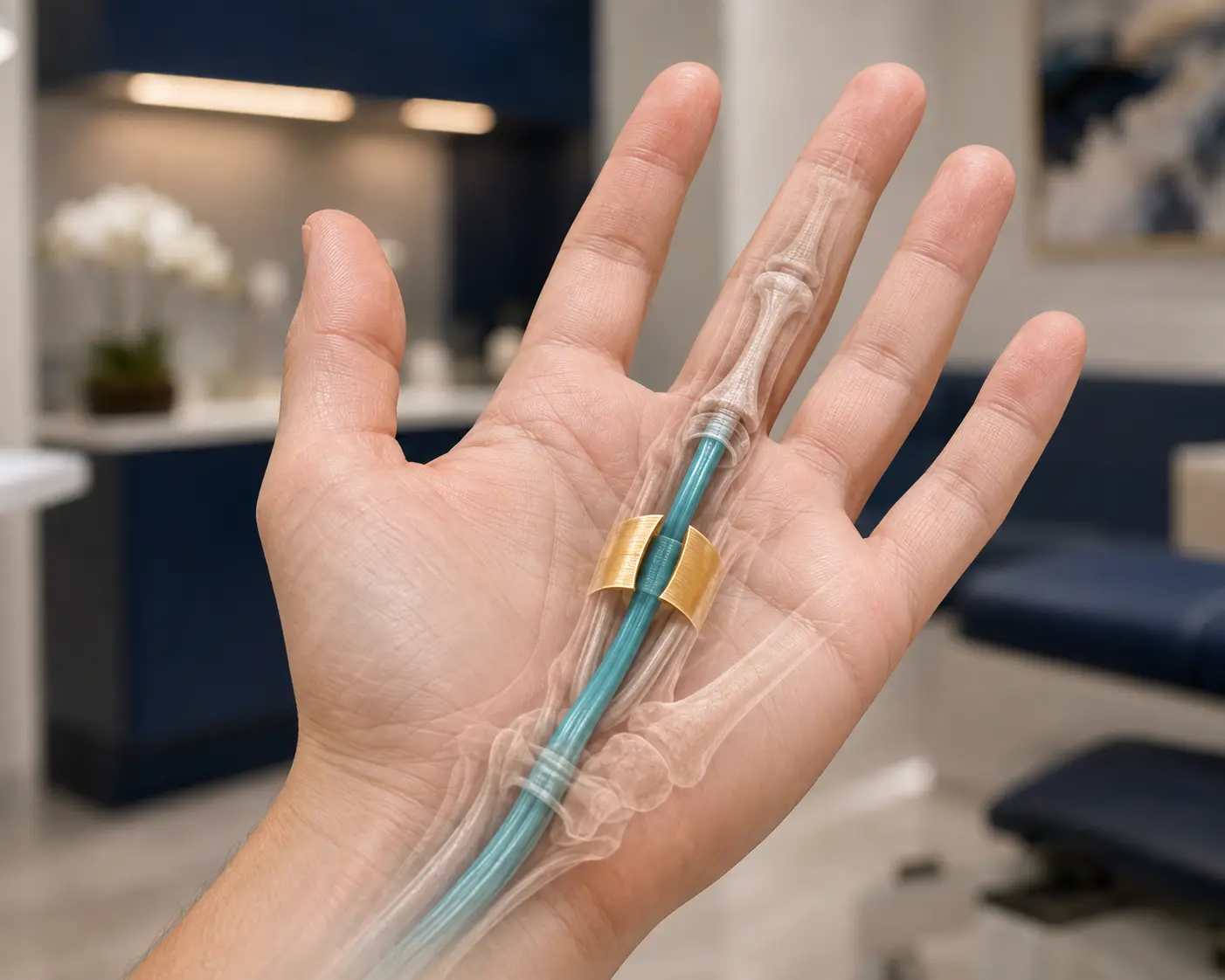
Trigger finger release opens the tight A1 pulley at the base of the affected finger or thumb. This gives the swollen flexor tendon enough room to glide smoothly instead of catching, clicking or locking. The remaining pulleys continue guiding the tendon.Who it may help
When might it be considered?
- Persistent painful triggering despite activity changes or injection treatment
- A finger that repeatedly locks or needs the other hand to straighten
- A fixed locked finger
- Severe symptoms or medical factors that make injection less appropriate
Before surgery
What may be considered first?
- Activity modification and short-term splinting
- Anti-inflammatory treatment where medically appropriate
- Corticosteroid injection
- Observation when symptoms are mild and improving
Inside the operating theatre
What actually happens during the operation?
Finding the A1 pulley
Through a small incision in the palm, the surgeon identifies the tight pulley while protecting the nerves on either side of the finger.
Opening the restriction
The A1 pulley is divided so the tendon can move without catching. The tendon remains intact and the other pulleys are preserved.
Testing the glide
The surgeon checks that the finger bends and straightens freely before closing and dressing the wound.
After the operation
What does recovery involve?
Finger movement usually begins immediately.
Palm tenderness and swelling can last several weeks, and a longstanding stiff finger may require hand therapy.
Heavy gripping is avoided until the wound is secure and the palm is comfortable.
Informed consent
Important risks to understand
- Infection
- Scar tenderness
- Stiffness
- Nerve injury
- Persistent or recurrent triggering
- Bowstringing if additional pulleys are damaged
- Complex regional pain syndrome
This is a general guide, not a complete consent discussion. Your surgeon will explain risks specific to your diagnosis, health, anatomy and proposed technique.
Common patient questions
Questions people often ask
Will cutting the pulley weaken my finger?+
The A1 pulley can be released without normally impairing finger function because the remaining pulley system continues to guide the tendon.
Why can stiffness remain after the triggering stops?+
A finger that has been painful or locked for a long time may develop joint and tendon stiffness. Movement and sometimes hand therapy are still needed.
Can trigger finger return?+
Recurrence after a complete release is uncommon but possible. Other fingers may develop triggering separately.
Clinical references
These independent patient resources informed the general explanation above.