In plain language
What is shoulder arthroscopy?
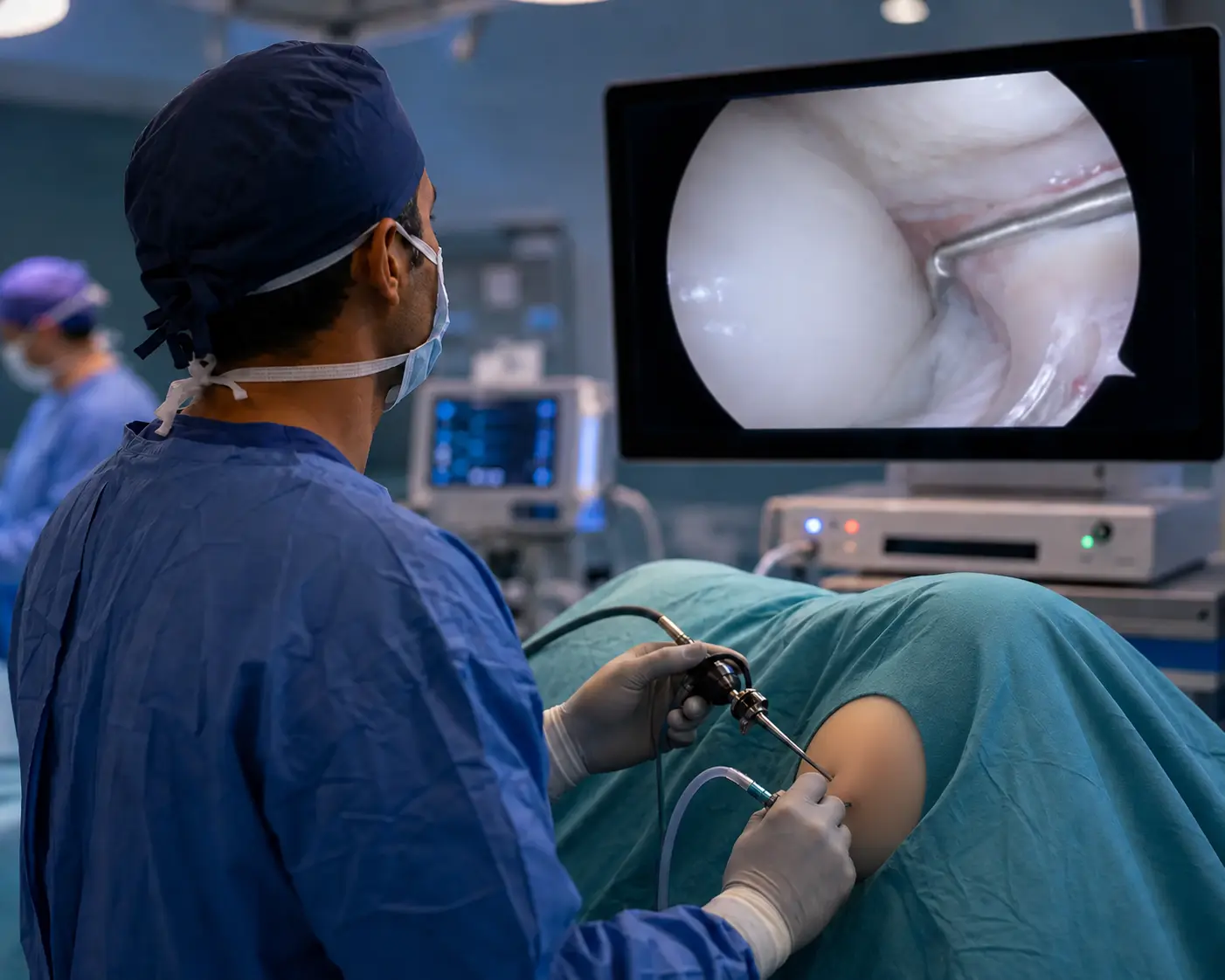
Shoulder arthroscopy uses a small camera and fine instruments through keyhole portals. It allows the surgeon to inspect the joint and the space above the rotator cuff, then treat specific problems such as a rotator cuff tear, labral injury, instability, inflamed bursa or biceps pathology. Recovery is determined by what is repaired, not by the size of the skin cuts.Who it may help
When might it be considered?
- A rotator cuff tear that is repairable and remains symptomatic
- Recurrent shoulder instability or a labral tear
- Persistent impingement or bursitis after appropriate nonsurgical care
- Selected biceps, cartilage or frozen-shoulder problems
Before surgery
What may be considered first?
- Activity modification and structured shoulder rehabilitation
- Pain medication or selected injection treatment
- Observation when a tear is small, symptoms are manageable and strength is acceptable
- Open or replacement surgery for problems not suited to arthroscopy
Inside the operating theatre
What actually happens during the operation?
Viewing the joint
The camera enters through a small portal while sterile fluid opens the space. The surgeon inspects cartilage, the labrum, biceps anchor and deep surface of the rotator cuff.
Viewing above the cuff
The camera is moved into the subacromial space to assess the bursa, acromion and outer surface of the rotator cuff.
Repair or treatment
A torn cuff may be secured back to bone with suture anchors. A detached labrum can be repaired, inflamed bursa removed, and selected biceps or bone-spur problems addressed according to the diagnosis.
Protecting the repair
Portal wounds are closed and the arm may be placed in a sling. Tendon or labral healing takes much longer than skin healing, so movement progresses in protected stages.
After the operation
What does recovery involve?
A sling may be needed for several weeks after repair, while simple decompression may permit earlier movement.
Physiotherapy usually progresses from protected passive movement to active control and then strengthening.
Tendon-to-bone healing takes months. Returning too quickly to lifting or sport can place the repair at risk.
Informed consent
Important risks to understand
- Infection
- Stiffness or frozen shoulder
- Nerve injury
- Persistent pain
- Failure or re-tear of a repair
- Anchor problems
- Need for further surgery
This is a general guide, not a complete consent discussion. Your surgeon will explain risks specific to your diagnosis, health, anatomy and proposed technique.
Common patient questions
Questions people often ask
Is decompression the same as rotator cuff repair?+
No. Decompression removes inflamed bursal tissue and selected bone where appropriate. A cuff repair uses sutures and anchors to reattach torn tendon to bone.
Why can I not actively lift the arm immediately?+
After tendon or labral repair, early active loading can pull on the healing fixation. The staged plan protects the repair while preventing avoidable stiffness.
How long before sport or heavy work?+
This varies with the repair, tissue quality and required strength. It is often measured in months rather than weeks after a significant cuff or instability repair.
Clinical references
These independent patient resources informed the general explanation above.