
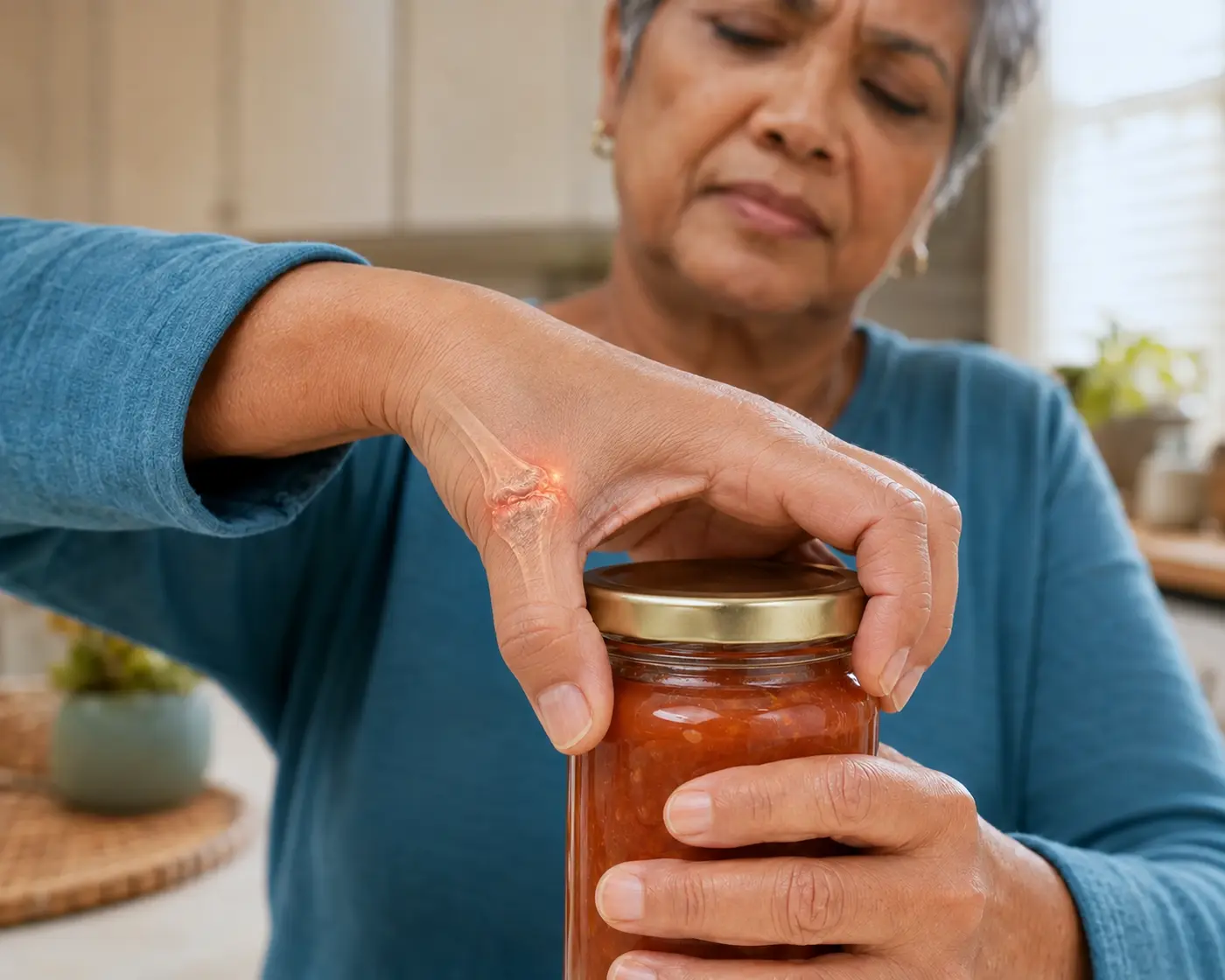
Understanding Thumb Arthritis
What patients commonly notice
Wear at the basal thumb joint may cause pain, weakness and difficulty with pinching or opening containers. The exact pattern and severity can vary, so a clinical assessment is important before deciding on treatment.
Common symptoms
- Pain at the base of the thumb
- Weak pinch and difficulty opening jars
- Swelling, grinding or progressive deformity
Causes and risk factors
There may be more than one contributing factor. Common possibilities include:
- Age-related cartilage wear
- Joint laxity and repetitive pinch loading
- Previous injury or inflammatory arthritis
How is thumb arthritis assessed?
Assessment may include hand strength, sensation, dexterity, tendon movement and joint stability. X-rays, ultrasound, MRI or nerve-conduction studies are selected according to the suspected problem.
Treatment options
Treatment is matched to the diagnosis, symptom severity, general health and the activities you need to return to. Options may include:
- Activity modification, splinting and hand therapy
- Medication or selected joint injection
- Reconstructive surgery for advanced persistent symptoms
Surgery is not automatically the first step. When it is considered, the likely benefit, alternatives and recovery requirements should be discussed clearly.
Common questions
Why does thumb arthritis make opening jars and pinching painful?
The basal thumb joint carries high forces during pinch and grip. Cartilage loss there can cause pain, weakness, grinding and difficulty with keys, lids and buttons.
Which splint is useful for basal thumb arthritis?
A thumb-support splint can reduce painful movement while allowing finger use. The best design depends on whether support is needed only for activity or for longer periods.
When is surgery considered for thumb arthritis?
Surgery may be considered when pain and loss of pinch function remain limiting despite splinting, hand therapy, medication and selected injection treatment. Several reliable procedures are available depending on the joint and patient.
This page provides general patient information and does not replace a consultation or personalised medical advice.