In plain language
What is ganglion cyst excision?
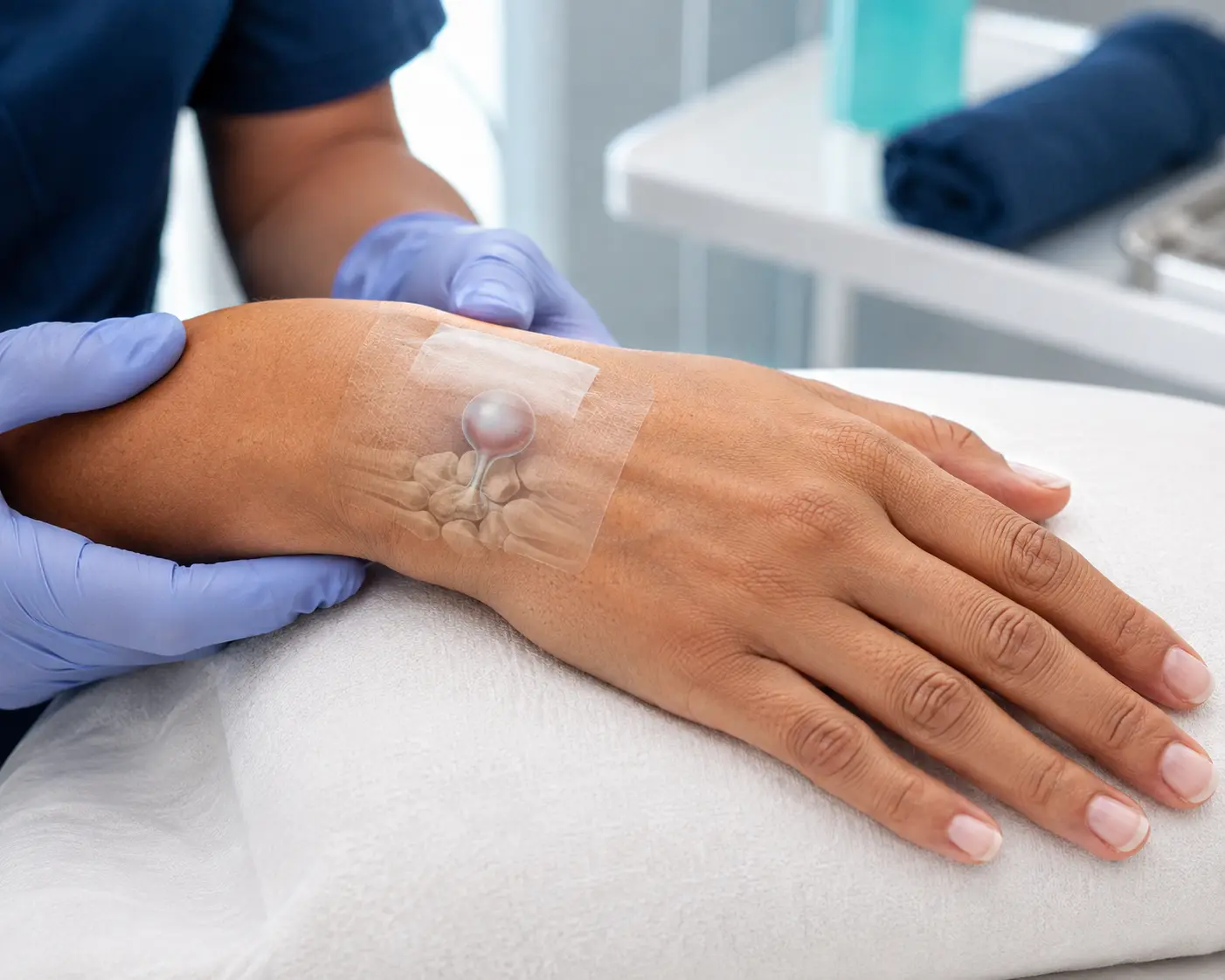
A ganglion is a benign, fluid-filled lump that usually arises from a nearby joint or tendon sheath. Excision removes the cyst and follows its stalk back to its origin while protecting nearby tendons, nerves and blood vessels. Surgery is usually considered when pain, function, nerve pressure or repeated recurrence makes observation or aspiration unsuitable.Who it may help
When might it be considered?
- A painful ganglion that limits wrist or hand use
- A cyst that repeatedly returns after aspiration
- Numbness or weakness from pressure on a nearby nerve
- A persistent lump where the diagnosis has been confirmed and the patient understands scar and recurrence risks
Before surgery
What may be considered first?
- Observation when the cyst is painless and harmless
- Temporary activity modification or support
- Aspiration in selected cysts, understanding that recurrence is common
- Further imaging when the diagnosis or relationship to vessels and nerves is uncertain
Inside the operating theatre
What actually happens during the operation?
Confirming the cyst
The surgeon examines the lump and may use ultrasound or other imaging if its origin, depth or relationship to nearby structures is unclear.
Protecting nearby structures
Through a small incision, the cyst is separated carefully from skin, tendons, nerves and blood vessels. Volar wrist ganglia require particular care because the radial artery may be close.
Following the stalk
The cyst and its stalk are traced to the joint capsule or tendon sheath. Removing the stalk and a small cuff of its origin helps reduce recurrence while avoiding unnecessary damage to the joint.
Closure and early movement
The wound is closed and dressed. Finger movement begins early, while wrist loading is increased gradually as swelling and wound tenderness settle.
After the operation
What does recovery involve?
Finger movement begins immediately, while wrist motion is guided by the wound and the surgeon's instructions.
Swelling, bruising and scar tenderness can last several weeks.
Desk work often resumes before heavy gripping, manual work or sport; a hand therapist may help if stiffness develops.
Informed consent
Important risks to understand
- Infection
- Scar tenderness
- Stiffness
- Nerve, tendon or blood-vessel injury
- Persistent pain
- Recurrence of the ganglion
- Complex regional pain syndrome
This is a general guide, not a complete consent discussion. Your surgeon will explain risks specific to your diagnosis, health, anatomy and proposed technique.
Common patient questions
Questions people often ask
Can the ganglion come back after surgery?+
Yes. Removing the cyst and its stalk lowers the chance of recurrence but cannot eliminate it completely because the ganglion arises from a joint or tendon sheath.
Is a ganglion cancerous?+
Ganglion cysts are benign. A lump with an unusual appearance, rapid growth or uncertain diagnosis should be assessed rather than assumed to be a ganglion.
Why not simply drain it?+
Aspiration can relieve a suitable cyst, but the stalk remains and recurrence is common. Some cysts are too close to important vessels or nerves for routine aspiration.
Clinical references
These independent patient resources informed the general explanation above.