In plain language
What is de quervain’s release?
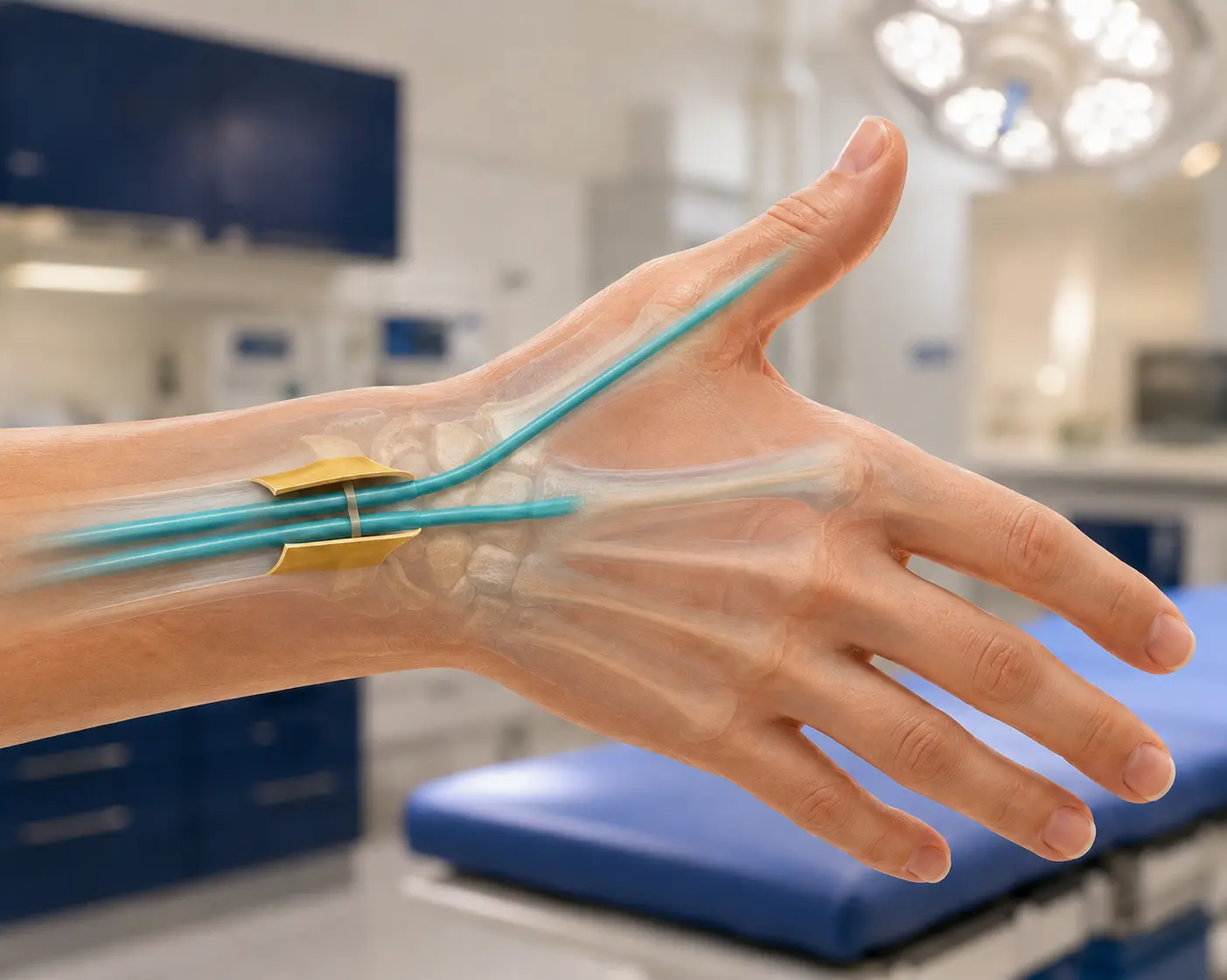
De Quervain’s release opens the tight tendon sheath over the thumb side of the wrist. This creates room for the abductor pollicis longus and extensor pollicis brevis tendons to glide. The surgeon also checks for a separate internal compartment, which is a common reason symptoms can persist if it is not released.Who it may help
When might it be considered?
- Persistent thumb-side wrist pain despite rest, splinting and appropriate therapy
- Symptoms that return after injection treatment
- Marked tendon-sheath thickening or functional limitation
- A confirmed diagnosis where other causes of radial wrist pain have been excluded
Before surgery
What may be considered first?
- Activity and ergonomic modification
- A thumb-support splint
- Pain medication where appropriate
- Corticosteroid injection into all involved tendon compartments
Inside the operating theatre
What actually happens during the operation?
Protecting the sensory nerve
A small incision is made over the first dorsal compartment. Fine branches of the radial sensory nerve are identified and protected.
Opening the tendon sheath
The tight sheath is released in a position that reduces the risk of the tendons slipping out of place. Any separate sub-compartment is identified and opened.
Checking tendon movement
The two thumb tendons are inspected and allowed to glide freely before the wound is closed.
After the operation
What does recovery involve?
Light finger and thumb movement begins early while forceful pinching and lifting are limited.
Scar sensitivity and swelling can persist for several weeks.
Return to repetitive work is gradual and should account for grip, comfort and the original aggravating activity.
Informed consent
Important risks to understand
- Infection
- Scar tenderness
- Irritation or injury to the radial sensory nerve
- Tendon instability
- Incomplete release
- Persistent or recurrent pain
- Complex regional pain syndrome
This is a general guide, not a complete consent discussion. Your surgeon will explain risks specific to your diagnosis, health, anatomy and proposed technique.
Common patient questions
Questions people often ask
Why can an injection fail?+
Some patients have separate tendon compartments. If medication does not reach each involved compartment, symptoms may persist. The diagnosis may also need reconsideration.
Will my thumb be immobilised?+
A dressing or short period of support may be used, but prolonged immobilisation is not always required. The exact plan depends on the operation and wound.
Is this the same as thumb arthritis?+
No. De Quervain’s affects tendons at the wrist, while thumb-base arthritis affects the joint. Both can cause pain near the thumb but treatment differs.
Clinical references
These independent patient resources informed the general explanation above.