
In plain language
What is knee arthroscopy?
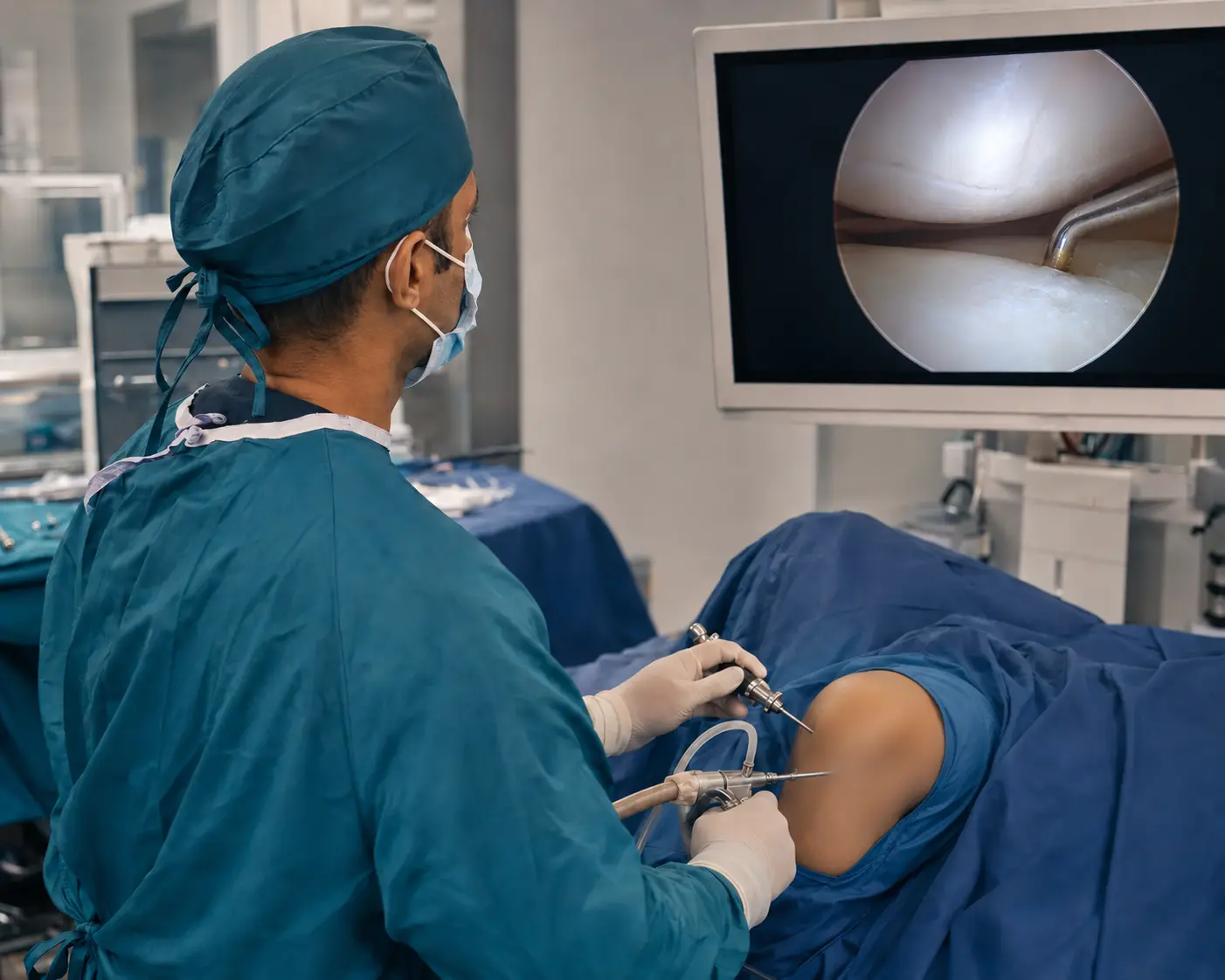
Knee arthroscopy is keyhole surgery performed through small portals. A thin camera fills the joint with clear fluid and displays the structures on a screen. Fine instruments can then trim or repair selected meniscus tears, remove loose fragments, treat some cartilage injuries or assist ligament procedures. It is not a routine washout for widespread knee arthritis.Who it may help
When might it be considered?
- A repairable or mechanically symptomatic meniscus tear
- A loose body causing catching or locking
- Selected focal cartilage injuries
- ACL or other ligament reconstruction performed arthroscopically
- Infection requiring urgent joint washout
Before surgery
What may be considered first?
- Activity modification and structured rehabilitation
- Medication or selected injection treatment
- Observation for tears that do not cause mechanical symptoms
- Different surgery when arthritis or alignment—not a focal lesion—is the main problem
Inside the operating theatre
What actually happens during the operation?
Camera portals
Two or more small openings are made around the knee. Sterile fluid expands the joint and a narrow camera provides a magnified view.
Systematic inspection
The surgeon inspects the cartilage surfaces, menisci, cruciate ligaments and recesses of the joint to confirm the pathology seen on examination and imaging.
Treating the problem
Small instruments are introduced through a separate portal. Depending on the diagnosis, a meniscus may be repaired or unstable damaged tissue trimmed; loose fragments can be removed and selected cartilage lesions treated.
Closing the portals
Fluid is drained and the small portal wounds are closed or dressed. The exact rehabilitation plan depends far more on what was repaired than on the small skin incisions.
After the operation
What does recovery involve?
Simple trimming procedures often allow earlier weight-bearing and movement than meniscus repair or ligament reconstruction.
Swelling and thigh weakness are common and should be addressed with progressive rehabilitation.
Return to driving, work and sport depends on the treated structure, side, strength, swelling and safe reaction time.
Informed consent
Important risks to understand
- Infection
- Blood clots
- Stiffness or swelling
- Cartilage or nerve injury
- Persistent symptoms
- Failure of a repair to heal
- Need for further treatment
This is a general guide, not a complete consent discussion. Your surgeon will explain risks specific to your diagnosis, health, anatomy and proposed technique.
Common patient questions
Questions people often ask
Is every meniscus tear treated with surgery?+
No. Many degenerative or stable tears improve with rehabilitation. Surgery is considered when symptoms, tear pattern and patient goals make repair or treatment reasonable.
Will a scope cure knee arthritis?+
No. Arthroscopy cannot restore cartilage lost throughout an arthritic joint and is not routinely recommended simply to wash out osteoarthritis.
Why is recovery longer after a meniscus repair?+
A repair needs biological healing. Weight-bearing, bending and sport may be restricted to protect the sutured tissue.
Clinical references
These independent patient resources informed the general explanation above.