
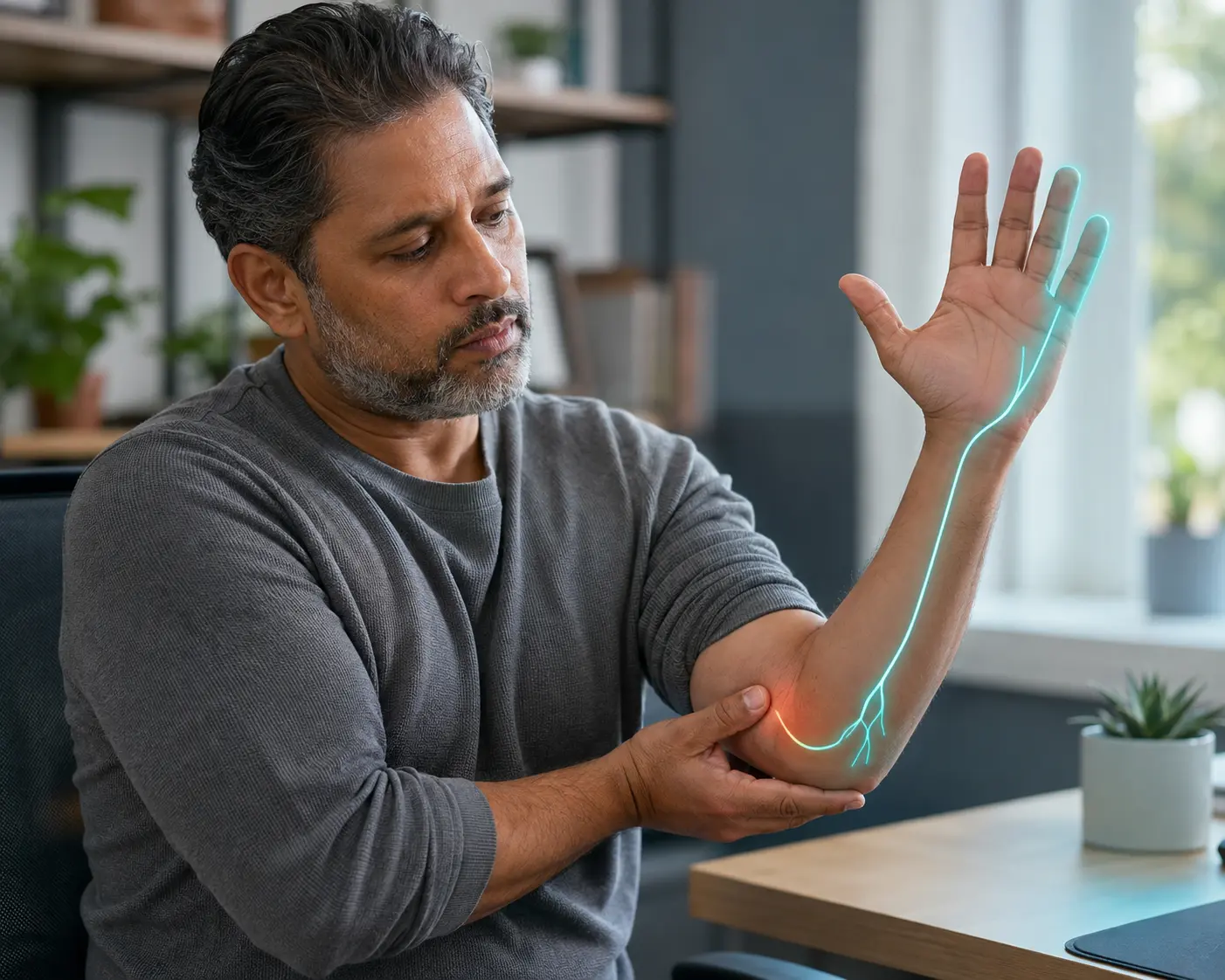
Understanding Ulnar Nerve Entrapment
What patients commonly notice
Pressure on the ulnar nerve around the elbow may produce numbness, tingling or weakness in the hand. The exact pattern and severity can vary, so a clinical assessment is important before deciding on treatment.
Common symptoms
- Numbness in the ring and little fingers
- Symptoms worsened by prolonged elbow flexion
- Hand weakness, clumsiness or muscle wasting in advanced cases
Causes and risk factors
There may be more than one contributing factor. Common possibilities include:
- Compression in the cubital tunnel
- Repeated leaning on the elbow
- Nerve instability, arthritis or previous injury
How is ulnar nerve entrapment assessed?
Assessment focuses on the location of pain, tendon and muscle function, joint movement and nerve findings. Imaging or nerve tests may be used when the examination suggests they will add useful information.
Treatment options
Treatment is matched to the diagnosis, symptom severity, general health and the activities you need to return to. Options may include:
- Avoid prolonged flexion and pressure on the elbow
- Night positioning and nerve-focused rehabilitation
- Surgical decompression or transposition for progressive or persistent deficit
Surgery is not automatically the first step. When it is considered, the likely benefit, alternatives and recovery requirements should be discussed clearly.
Common questions
Why are my ring and little fingers numb at night?
Bending the elbow tightens the cubital tunnel and can increase pressure on the ulnar nerve. Night positioning that avoids prolonged deep flexion may reduce symptoms.
Will I need a nerve-conduction test?
The diagnosis is often suspected clinically. Nerve testing can help confirm the site and severity, particularly when symptoms persist, weakness is present or surgery is being considered.
Can ulnar nerve damage become permanent?
Long-standing severe compression can cause muscle wasting and lasting weakness. Progressive weakness, constant numbness or visible muscle loss should be assessed without delay.
This page provides general patient information and does not replace a consultation or personalised medical advice.