Understanding Femoroacetabular Impingement
What patients commonly notice
Abnormal contact between the femoral head and hip socket can limit movement and damage surrounding tissue. The exact pattern and severity can vary, so a clinical assessment is important before deciding on treatment.
Common symptoms
- Groin pain with deep flexion, squatting or twisting
- Hip stiffness and reduced rotation
- A limp or sharp pain during activity
Causes and risk factors
There may be more than one contributing factor. Common possibilities include:
- Cam-type extra bone at the femoral head-neck junction
- Pincer-type overcoverage of the socket
- A combination of cam and pincer anatomy
How is femoroacetabular impingement assessed?
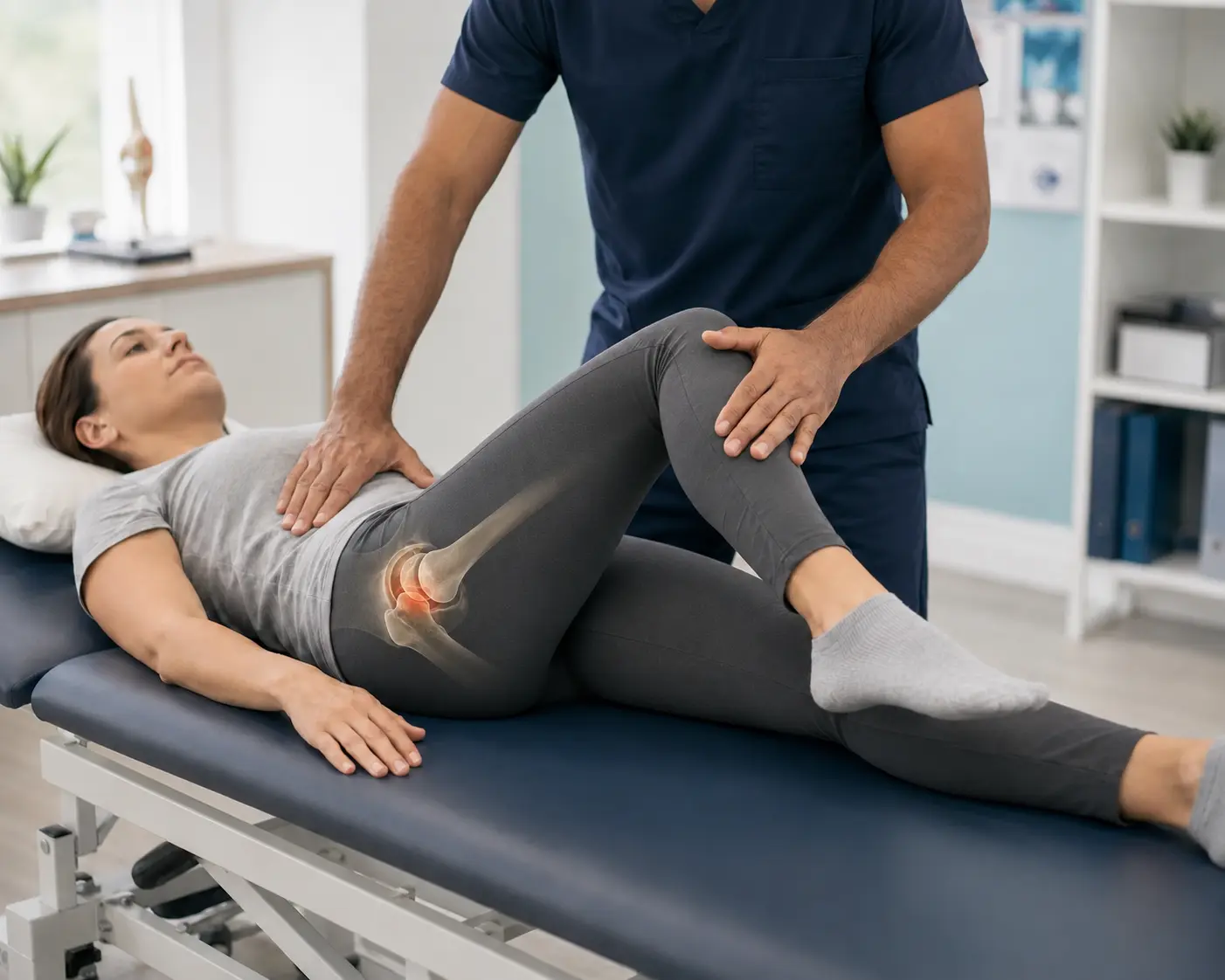
Assessment usually combines a history of where and when the pain occurs, examination of gait and hip movement, and appropriate imaging. Symptoms from the lower back or surrounding tendons may also need to be considered.
Treatment options
Treatment is matched to the diagnosis, symptom severity, general health and the activities you need to return to. Options may include:
- Modify aggravating activity and improve hip mechanics
- Physiotherapy and appropriate symptom control
- Joint-preserving surgery when symptoms and imaging support it
Surgery is not automatically the first step. When it is considered, the likely benefit, alternatives and recovery requirements should be discussed clearly.
Common questions
Does having a cam or pincer shape mean that I need surgery?
No. These shapes are common and may cause no symptoms. Treatment is directed at pain and functional limitation, not the X-ray appearance alone.
Which movements usually aggravate hip impingement?
Deep hip flexion, low squats, twisting and prolonged sitting commonly reproduce groin pain. Small changes to technique and training load may reduce irritation while strength and movement are improved.
Can hip impingement lead to arthritis?
Repeated abnormal contact can damage the labrum and cartilage in some patients, but progression varies. Examination and imaging help determine whether the shape is clinically important and whether joint damage is already present.
This page provides general patient information and does not replace a consultation or personalised medical advice.