
In plain language
What is carpal tunnel release?
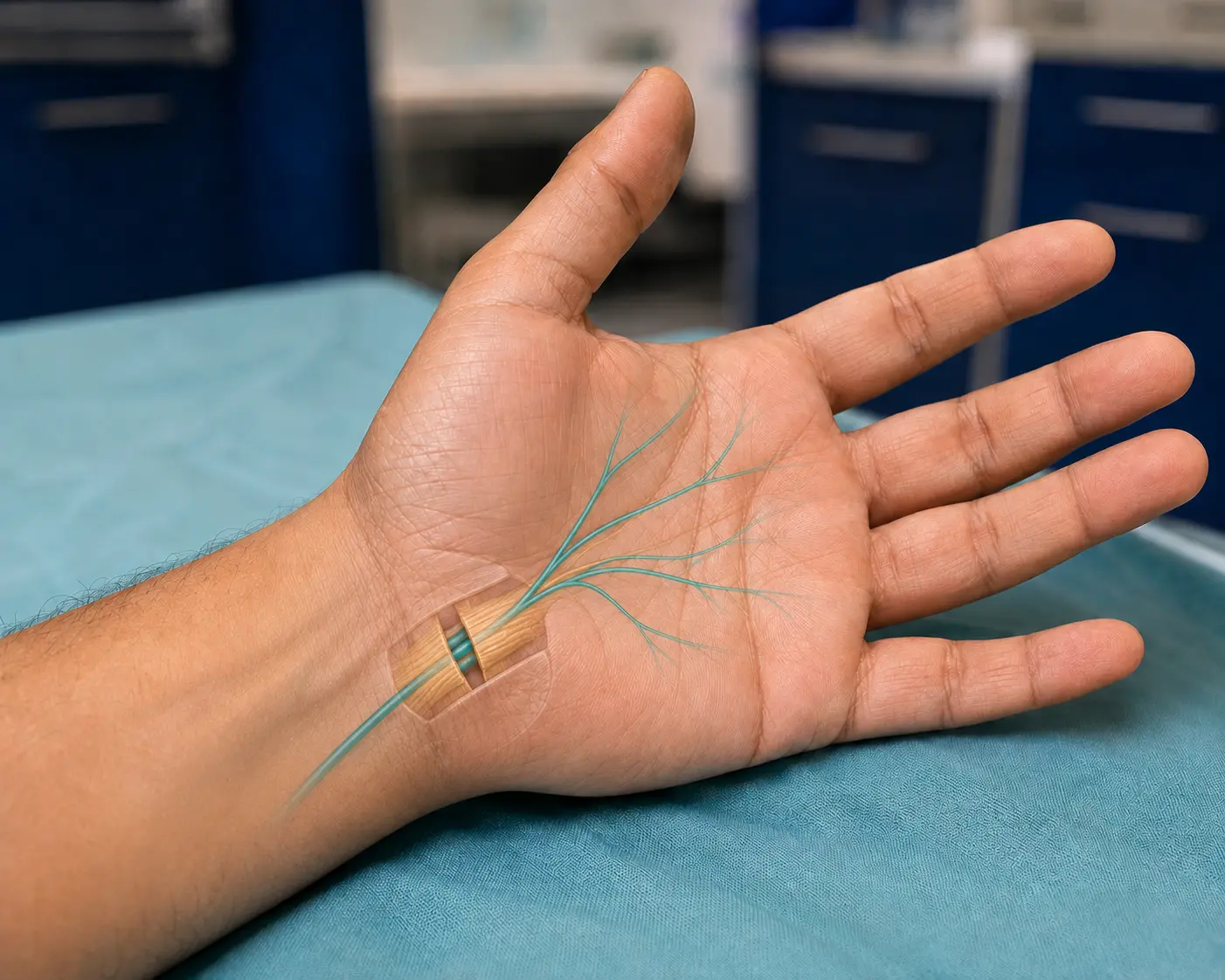
Carpal tunnel release creates more room for the median nerve by dividing the tight transverse carpal ligament at the wrist. The ligament is not removed; its cut edges gradually heal with a wider tunnel beneath them. The operation may be open or endoscopic, depending on the patient and surgeon.Who it may help
When might it be considered?
- Persistent night numbness, tingling or pain despite splinting and other appropriate care
- Weakness, dropping objects or loss of thumb-muscle power
- Nerve tests showing significant compression
- Severe or progressive symptoms where delay risks lasting nerve damage
Before surgery
What may be considered first?
- Night splinting and activity modification
- Treatment of contributing medical conditions
- A corticosteroid injection in selected cases
- Observation for mild, intermittent symptoms without weakness
Inside the operating theatre
What actually happens during the operation?
Locating the tunnel
Through a small palm incision or an endoscopic approach, the surgeon identifies the roof of the carpal tunnel while protecting nearby nerves, vessels and tendons.
Releasing the ligament
The transverse carpal ligament is divided along its length so pressure is removed from the median nerve.
Checking the nerve
The nerve is inspected where appropriate and the wound is closed. Finger movement is encouraged early to reduce swelling and tendon stiffness.
After the operation
What does recovery involve?
Night tingling may improve quickly, but longstanding numbness or weakness can recover slowly and may not fully reverse.
Palm tenderness and reduced grip are common for several weeks.
Desk work may resume earlier than forceful gripping, vibrating tools or heavy manual work.
Informed consent
Important risks to understand
- Infection
- Scar or pillar pain
- Stiffness
- Nerve or vessel injury
- Incomplete release
- Persistent or recurrent symptoms
- Complex regional pain syndrome
This is a general guide, not a complete consent discussion. Your surgeon will explain risks specific to your diagnosis, health, anatomy and proposed technique.
Common patient questions
Questions people often ask
Is the ligament needed after it is cut?+
The cut edges heal with more space beneath them. The other structures continue to support the wrist and hand.
Will numbness disappear immediately?+
Night symptoms often improve early, but a severely compressed nerve may take months to recover. Permanent nerve damage may not fully reverse.
When can I drive?+
Only when the dressing, pain and grip allow safe control of the vehicle and you are not using impairing medication.
Clinical references
These independent patient resources informed the general explanation above.