Understanding Hip Bursitis
What patients commonly notice
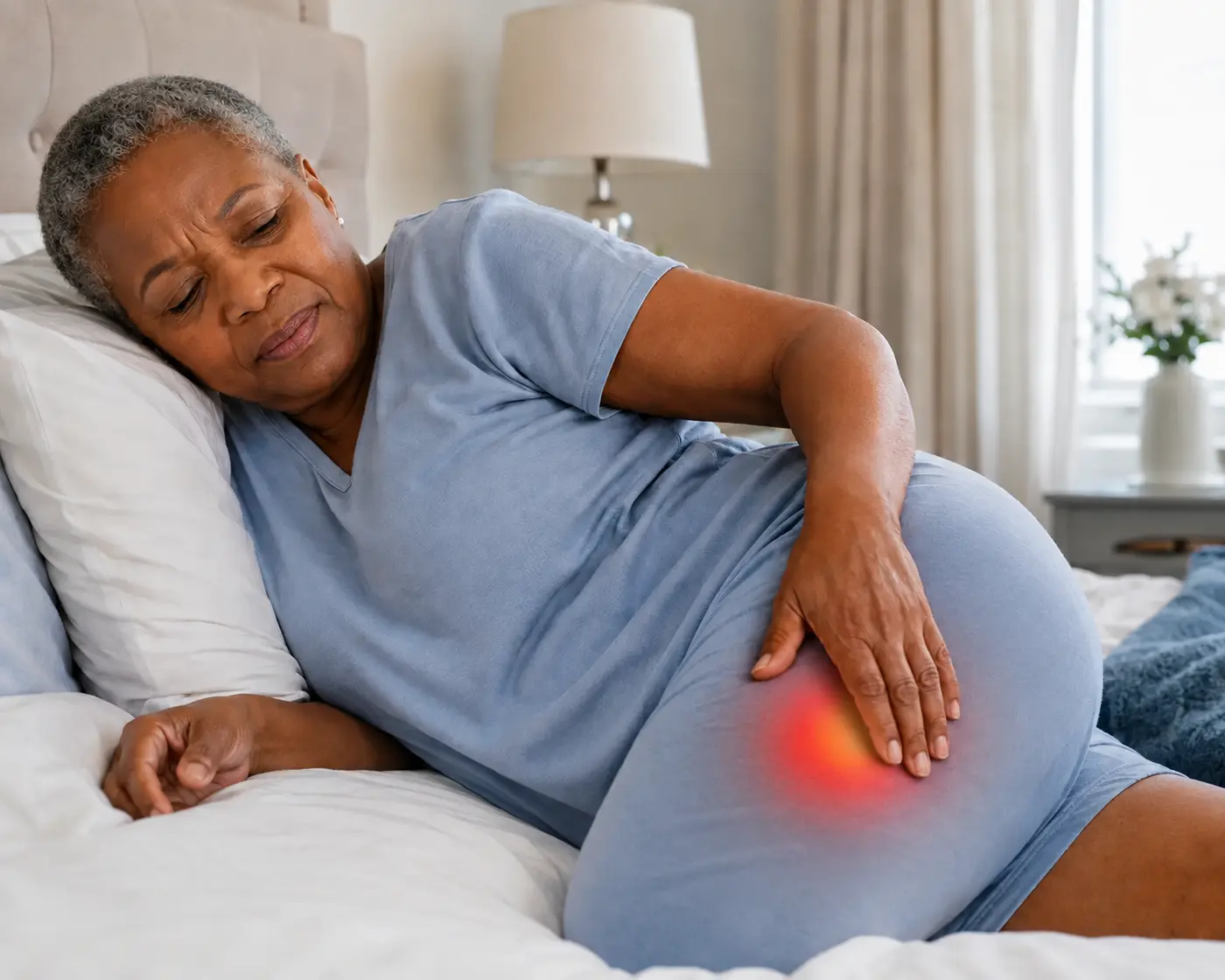
Irritation of tissues over the outer hip can cause tenderness and pain with walking, stairs or lying on that side. The exact pattern and severity can vary, so a clinical assessment is important before deciding on treatment.
Common symptoms
- Pain and tenderness over the outside of the hip
- Discomfort when lying on the affected side
- Pain with stairs, longer walks or rising from a chair
Causes and risk factors
There may be more than one contributing factor. Common possibilities include:
- Gluteal tendon overload or weakness
- Repetitive activity or a sudden increase in exercise
- Direct pressure, altered gait or lower-limb biomechanics
How is hip bursitis assessed?
Assessment usually combines a history of where and when the pain occurs, examination of gait and hip movement, and appropriate imaging. Symptoms from the lower back or surrounding tendons may also need to be considered.
Treatment options
Treatment is matched to the diagnosis, symptom severity, general health and the activities you need to return to. Options may include:
- Load modification and targeted gluteal strengthening
- Anti-inflammatory measures when clinically appropriate
- Ultrasound-guided injection for selected persistent cases
Surgery is not automatically the first step. When it is considered, the likely benefit, alternatives and recovery requirements should be discussed clearly.
Common questions
How is outer-hip bursitis different from hip-joint arthritis?
Greater trochanteric pain is usually tender over the outside of the hip and often hurts when lying on that side. Hip-joint arthritis more commonly causes deep groin pain, stiffness and reduced rotation.
Should I avoid sleeping on the painful side?
Reducing direct pressure can help during a flare. Try the opposite side with a pillow between the knees, but address gluteal strength and load as part of longer-term treatment.
Will a cortisone injection cure hip bursitis?
An injection may reduce pain for a period, but it does not correct tendon weakness or repeated overload. Rehabilitation and activity adjustment remain important, and injections are selected individually.
This page provides general patient information and does not replace a consultation or personalised medical advice.