Understanding Radial Tunnel Syndrome
What patients commonly notice
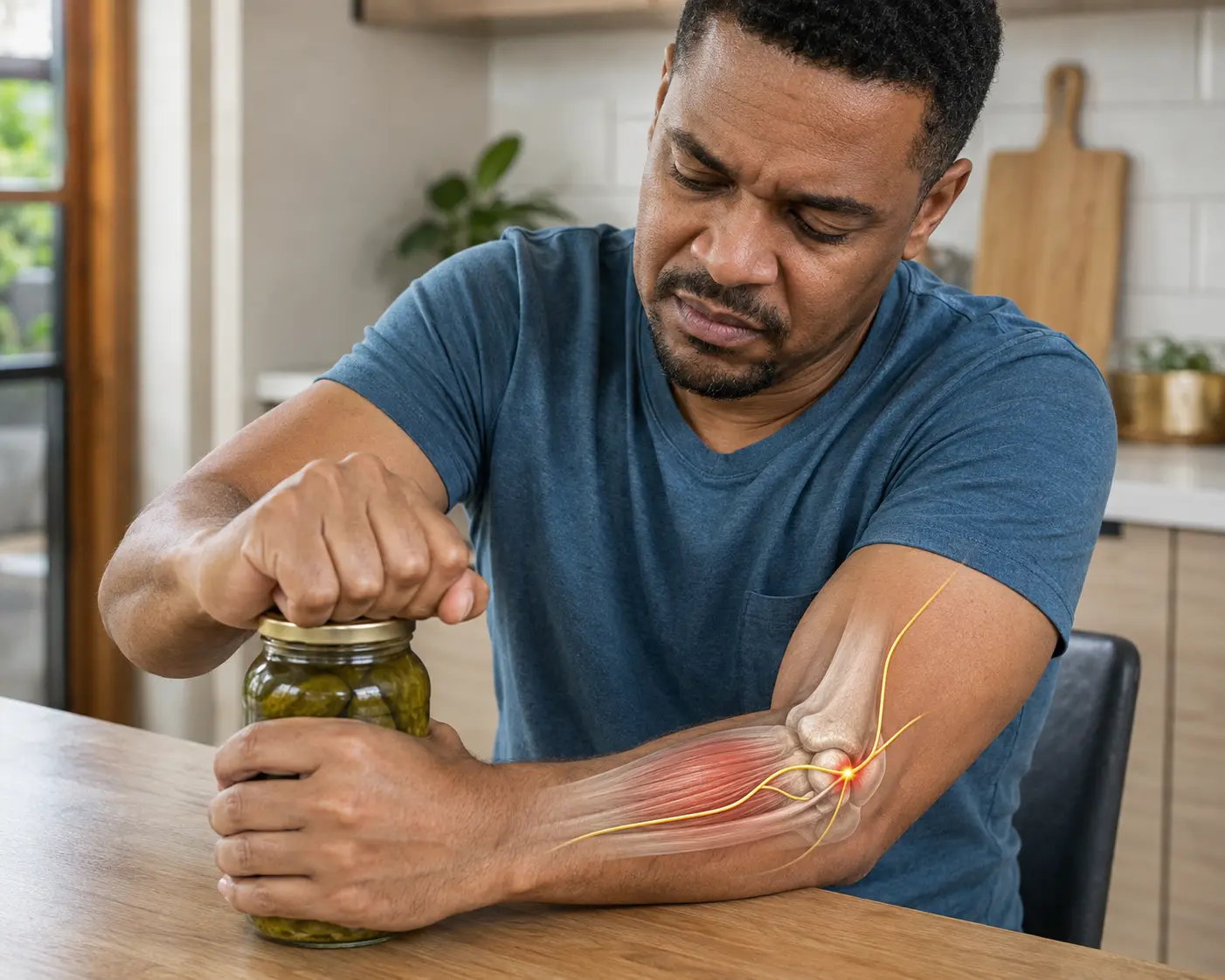
Compression or irritation of the radial nerve may cause aching pain along the outer elbow and forearm. The exact pattern and severity can vary, so a clinical assessment is important before deciding on treatment.
Common symptoms
- Aching pain a short distance below the outer elbow
- Pain with resisted forearm rotation or wrist extension
- Forearm fatigue without typical sensory loss
Causes and risk factors
There may be more than one contributing factor. Common possibilities include:
- Repetitive rotation and gripping
- Compression through muscles around the radial tunnel
- Scarring or anatomical narrowing
How is radial tunnel syndrome assessed?
Assessment focuses on the location of pain, tendon and muscle function, joint movement and nerve findings. Imaging or nerve tests may be used when the examination suggests they will add useful information.
Treatment options
Treatment is matched to the diagnosis, symptom severity, general health and the activities you need to return to. Options may include:
- Activity modification and ergonomic changes
- Physiotherapy and nerve-mobility work
- Surgical decompression for carefully selected persistent cases
Surgery is not automatically the first step. When it is considered, the likely benefit, alternatives and recovery requirements should be discussed clearly.
Common questions
How is radial tunnel syndrome different from tennis elbow?
Radial-tunnel pain is usually felt farther down the outer forearm, while tennis elbow is most tender directly over the outer bony prominence. The two conditions can overlap.
Will a nerve test confirm radial tunnel syndrome?
Nerve-conduction studies may be normal because the condition often causes pain without major loss of nerve function. The diagnosis relies heavily on the symptom pattern and examination.
When is radial-tunnel decompression considered?
Surgery is reserved for carefully selected patients with persistent, well-localised symptoms after a substantial trial of activity modification and rehabilitation.
This page provides general patient information and does not replace a consultation or personalised medical advice.