In plain language
What is spinal injections & rhizotomy?
Spinal injections place medication close to a suspected pain source under X-ray or other image guidance. Facet injections and medial branch blocks assess pain from the small joints at the back of the spine; a positive diagnostic block may lead to radiofrequency rhizotomy, which heats selected sensory nerve branches to reduce their pain signals. Nerve-root and epidural injections target inflammation around a spinal nerve. These treatments do not fuse the spine or repair worn discs.Who it may help
When might it be considered?
- Suspected facet-joint pain after clinical assessment
- Arm or leg pain caused by an inflamed spinal nerve
- Spinal stenosis or disc-related inflammation where a time-limited reduction in symptoms may assist recovery
- Patients requiring a diagnostic block before radiofrequency treatment
Before surgery
What may be considered first?
- Medication and activity modification
- Structured rehabilitation and progressive conditioning
- Observation when symptoms are improving and neurological function is stable
- Surgery when there is progressive neurological loss, instability or compression that is not appropriately treated by injection
Inside the operating theatre
What actually happens during the operation?
Choosing the target
The diagnosis determines whether the target is a facet joint, medial branch nerve, exiting nerve root or epidural space. The procedure should match the clinical question.
Image-guided positioning
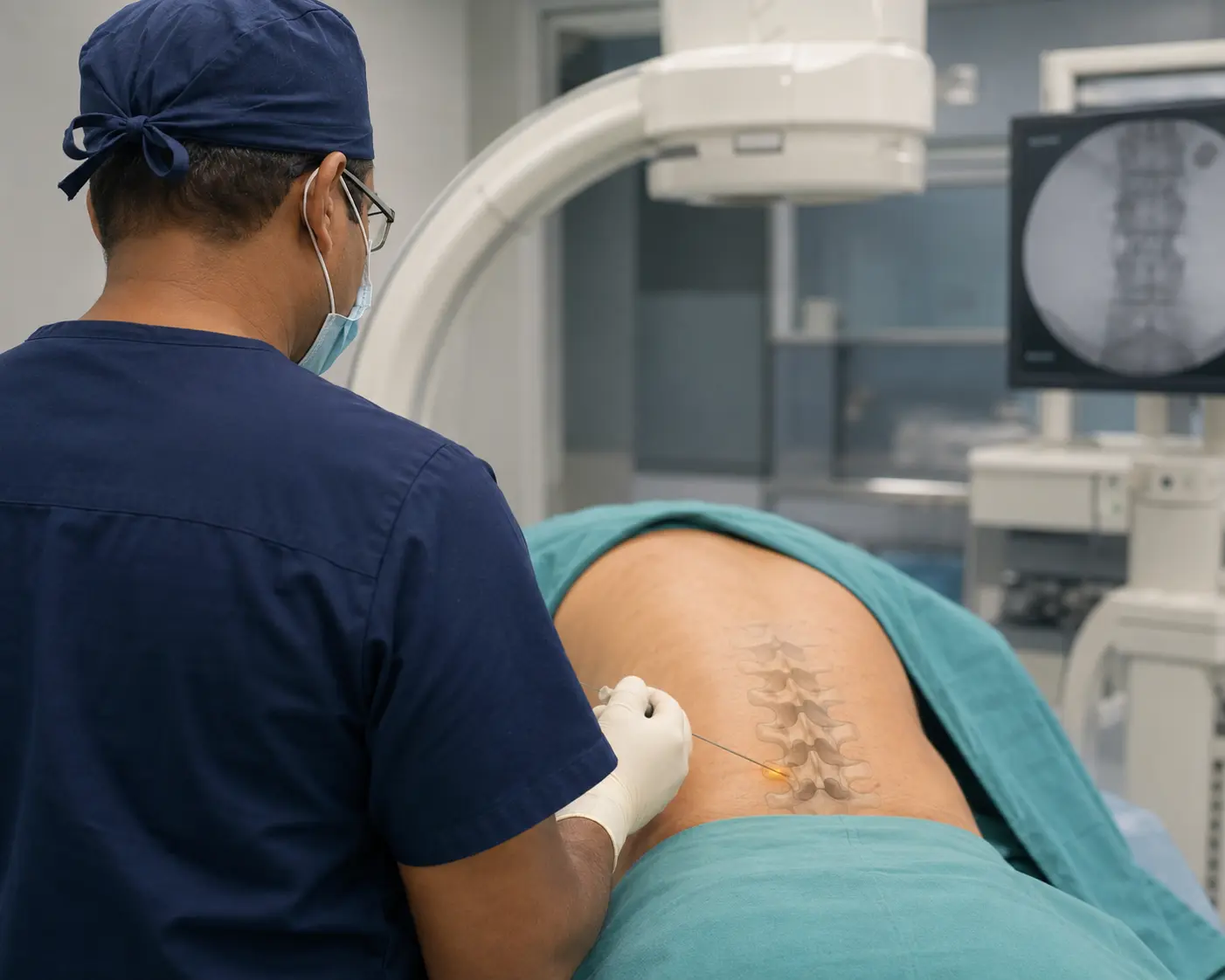
The patient is positioned on an X-ray table and the skin is cleaned. Live imaging guides a fine needle to the intended anatomical target.
Confirming placement
A small amount of contrast may be used when appropriate to confirm spread and reduce the risk of medication entering the wrong structure or a blood vessel.
Injection or diagnostic block
Local anaesthetic, sometimes with corticosteroid, is delivered in a small volume. A pain diary after a diagnostic block helps determine whether the targeted structure was responsible.
Radiofrequency rhizotomy
When carefully selected diagnostic blocks are positive, a radiofrequency probe can heat the small medial branch nerves supplying the painful facet joints. Motor nerves to the limbs are not the intended target.
After the operation
What does recovery involve?
Temporary soreness, heaviness or a short flare of usual pain can occur after the procedure.
Relief from local anaesthetic may be immediate but short-lived; corticosteroid benefit, when used, may take several days. Rhizotomy benefit may also take time to develop.
The response is not guaranteed and may be temporary because the underlying condition remains and small sensory nerves can recover.
Informed consent
Important risks to understand
- Bleeding or bruising
- Infection
- Temporary numbness or weakness
- Allergic or medication reaction
- Steroid-related side effects
- Nerve injury
- Headache after selected epidural procedures
- No benefit or temporary benefit only
This is a general guide, not a complete consent discussion. Your surgeon will explain risks specific to your diagnosis, health, anatomy and proposed technique.
Common patient questions
Questions people often ask
What is the difference between a nerve-root block and an epidural?+
A selective nerve-root block targets one exiting nerve more specifically. An epidural places medication in the epidural space where it may spread around more than one nerve. The symptoms and imaging guide the choice.
Does rhizotomy damage the spinal cord?+
No. The intended targets are small sensory medial branch nerves outside the spinal canal. Image guidance and testing are used to position the probe safely, although every procedure has risks.
Is an injection a permanent cure?+
Usually not. It may reduce inflammation, provide diagnostic information or create a window for rehabilitation. Duration of benefit varies widely.
Clinical references
These independent patient resources informed the general explanation above.