Understanding Golfer’s Elbow
What patients commonly notice
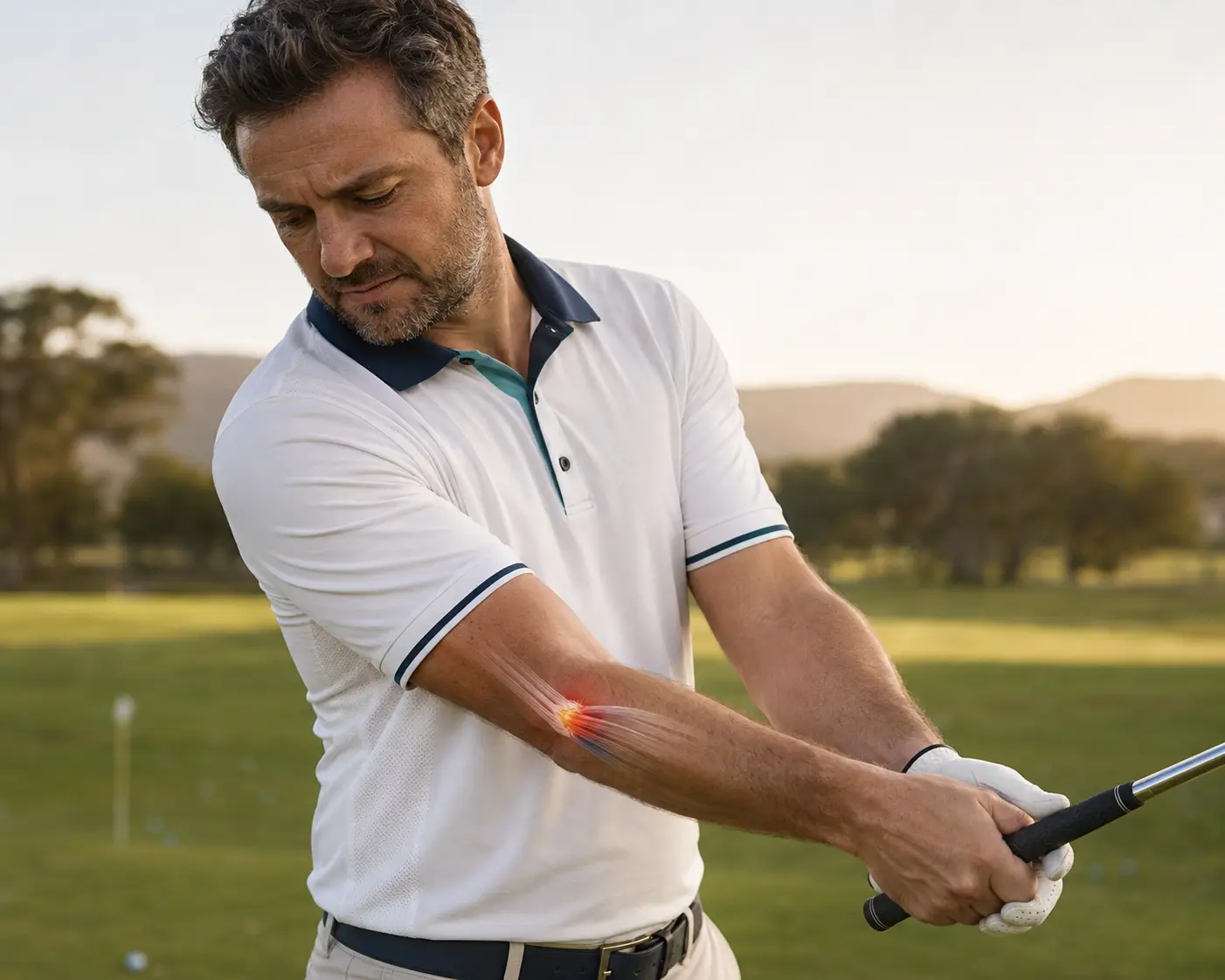
Irritation of the tendons on the inner elbow may cause pain with gripping, wrist flexion and forearm activity. The exact pattern and severity can vary, so a clinical assessment is important before deciding on treatment.
Common symptoms
- Inner elbow pain and tenderness
- Pain with gripping, throwing or wrist flexion
- Occasional forearm weakness
Causes and risk factors
There may be more than one contributing factor. Common possibilities include:
- Repetitive wrist flexion and forearm rotation
- Throwing or racquet-sport overload
- Manual work involving repeated gripping
How is golfer’s elbow assessed?
Assessment focuses on the location of pain, tendon and muscle function, joint movement and nerve findings. Imaging or nerve tests may be used when the examination suggests they will add useful information.
Treatment options
Treatment is matched to the diagnosis, symptom severity, general health and the activities you need to return to. Options may include:
- Activity modification and progressive strengthening
- Technique review, bracing and appropriate pain relief
- Injection or surgery only in selected resistant cases
Surgery is not automatically the first step. When it is considered, the likely benefit, alternatives and recovery requirements should be discussed clearly.
Common questions
Can golfer’s elbow occur without playing golf?
Yes. Repetitive gripping, wrist flexion, throwing and manual work can all overload the tendon origin on the inner elbow.
Why do I also have tingling in my ring and little fingers?
The ulnar nerve runs close to the inner elbow and may be irritated alongside the tendon. Numbness or hand weakness should be assessed because it may indicate a nerve problem rather than tendon pain alone.
Do I need to rest the arm completely?
Usually not. Reduce the movements that repeatedly provoke pain, then rebuild grip and forearm strength gradually. Complete inactivity can lead to unnecessary weakness and stiffness.
This page provides general patient information and does not replace a consultation or personalised medical advice.