Understanding Chondromalacia Patella
What patients commonly notice
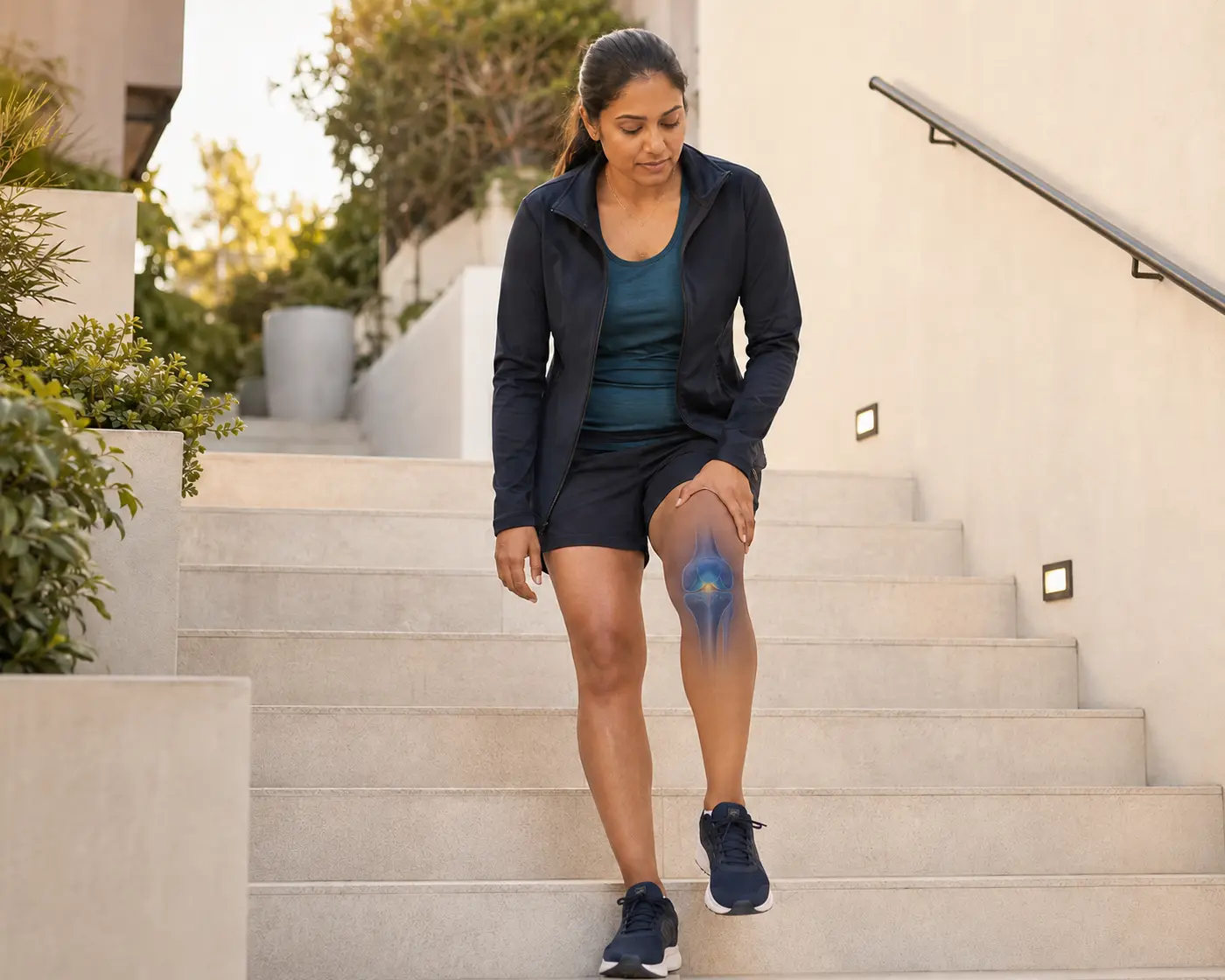
Irritation of cartilage beneath the kneecap commonly causes pain with stairs, squatting or prolonged sitting. The exact pattern and severity can vary, so a clinical assessment is important before deciding on treatment.
Common symptoms
- Pain around or behind the kneecap
- Discomfort with stairs, squats or prolonged sitting
- Grinding or clicking during knee movement
Causes and risk factors
There may be more than one contributing factor. Common possibilities include:
- Overload and repetitive impact
- Weakness or imbalance around the hip and knee
- Patellar tracking or lower-limb alignment factors
How is chondromalacia patella assessed?
Assessment usually includes the pattern of pain or instability, examination of movement, swelling, alignment and ligament stability, and appropriate imaging. The findings are interpreted alongside your activity level and goals.
Treatment options
Treatment is matched to the diagnosis, symptom severity, general health and the activities you need to return to. Options may include:
- Progressive quadriceps and hip strengthening
- Activity and training-load modification
- Taping, bracing or further intervention for selected structural problems
Surgery is not automatically the first step. When it is considered, the likely benefit, alternatives and recovery requirements should be discussed clearly.
Common questions
Does grinding behind the kneecap mean that cartilage is being destroyed?
Not necessarily. Grinding or clicking is common and may occur without serious damage. Pain, swelling, examination findings and functional limitation are more important than noise alone.
Why does patellofemoral pain worsen on stairs or after sitting?
These positions increase pressure between the kneecap and the groove of the thighbone. Strength, alignment, movement control and recent changes in activity can influence how much load the joint experiences.
What exercises are most useful for kneecap pain?
Progressive quadriceps and hip strengthening is commonly helpful, together with load management. Exercises should be selected and advanced according to symptoms rather than forcing repeatedly painful deep bends.
This page provides general patient information and does not replace a consultation or personalised medical advice.