
ACL Tear Treatment: Physiotherapy or Reconstruction?
Understand when ACL rehabilitation may be reasonable, when reconstruction is considered and which factors guide return-to-sport decisions.
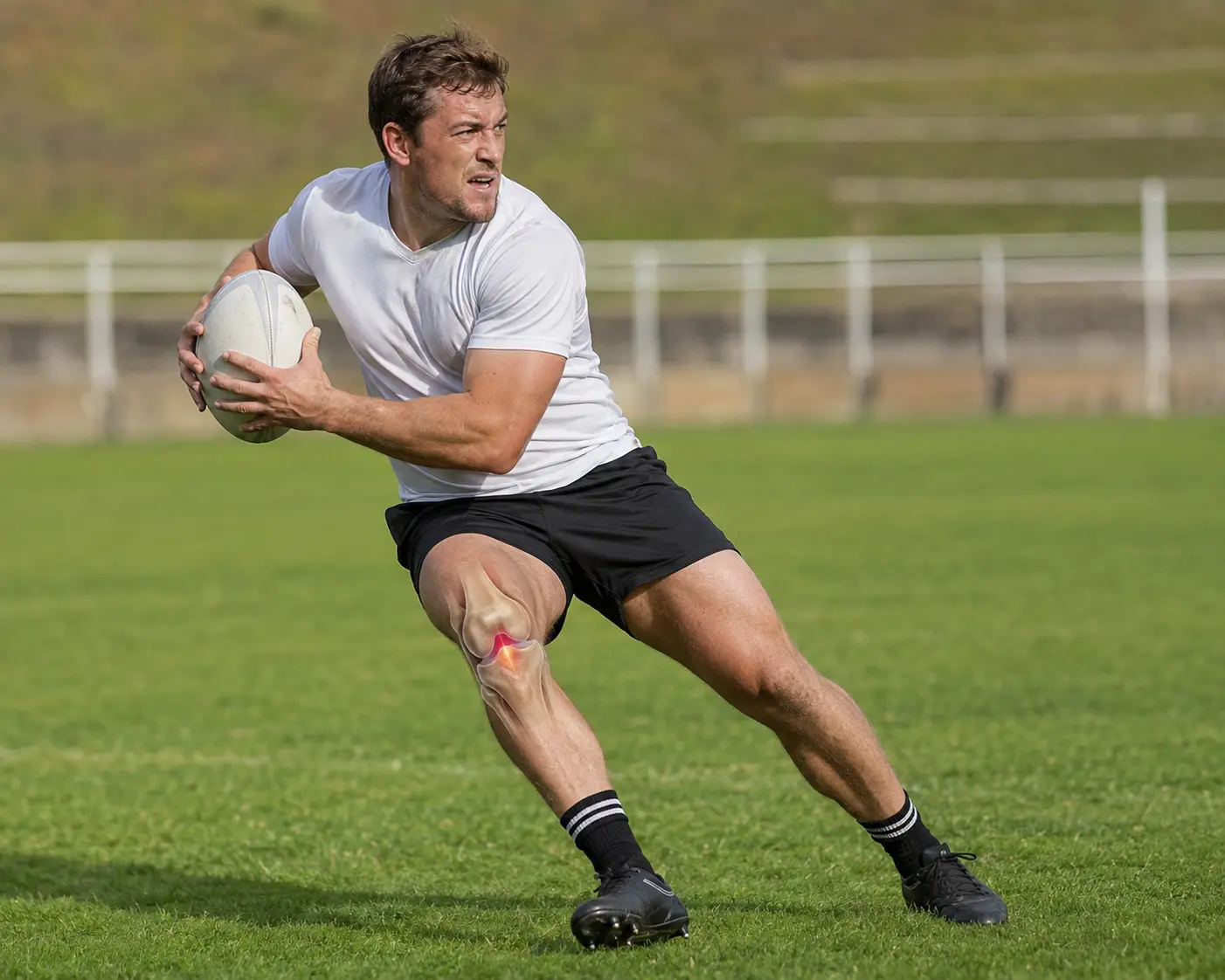
What the ACL does
The anterior cruciate ligament helps control forward movement and rotation of the knee. A tear can cause swelling, loss of confidence and instability during cutting, pivoting or sudden direction changes.
Pain may improve while instability remains, so the decision is not based on pain alone.
When rehabilitation may be appropriate
Initial treatment usually restores swelling control, full movement, quadriceps strength and normal walking. Some patients achieve a stable, functional knee without reconstruction.
- No repeated giving-way during daily activity
- Willingness to modify high-risk pivoting activity if necessary
- Good strength and movement control after rehabilitation
- No associated injury that independently requires surgery
When reconstruction is more likely to be discussed
Reconstruction may be considered when instability persists, the patient wants to return to pivoting sport or work, or the knee repeatedly gives way and risks further meniscus or cartilage injury.
MRI helps define associated damage, but the treatment plan still depends on examination, activity goals and the response to rehabilitation.
Return to sport is a process, not a date
Whether treatment is surgical or nonsurgical, return should follow objective recovery of strength, movement, control and confidence. Sport-specific testing is more useful than relying on time alone.
A rushed return increases the chance of another knee injury. Rehabilitation should also address landing mechanics, hip strength and the opposite limb.
Common questions
Questions patients often ask.
Can a complete ACL tear heal by itself?
The ACL has limited healing potential, although some tears may show continuity over time. The practical question is whether the knee becomes stable and functional for the patient’s goals.
Do I need surgery if I do not play sport?
Not necessarily. Daily function, occupational demands, associated injuries and episodes of giving-way matter more than the sporting label alone.
How soon should ACL reconstruction be performed?
Most knees benefit from allowing swelling to settle and movement to recover first. Timing is individual, but urgent assessment may be needed when another injury causes true locking or requires early repair.
Sources and further reading
This guide is general educational information, not a diagnosis or personal medical advice. Treatment decisions require an individual assessment.