



SERVICES
Hand & Wrist Conditions
Thumb Arthritis
(Basal Joint Arthritis)
Overview
Thumb arthritis, a degenerative disorder, progressively worsens over time due to the natural process of age and wear and tear of the joint. It occurs from degeneration of the cartilage at the ends of the bones that form the joint at the base of the thumb (carpometacarpal (CMC) joint). This degeneration can cause swelling, pain, limited range of motion, and flexibility in the thumb, making it hard to open jars and turn doorknobs.
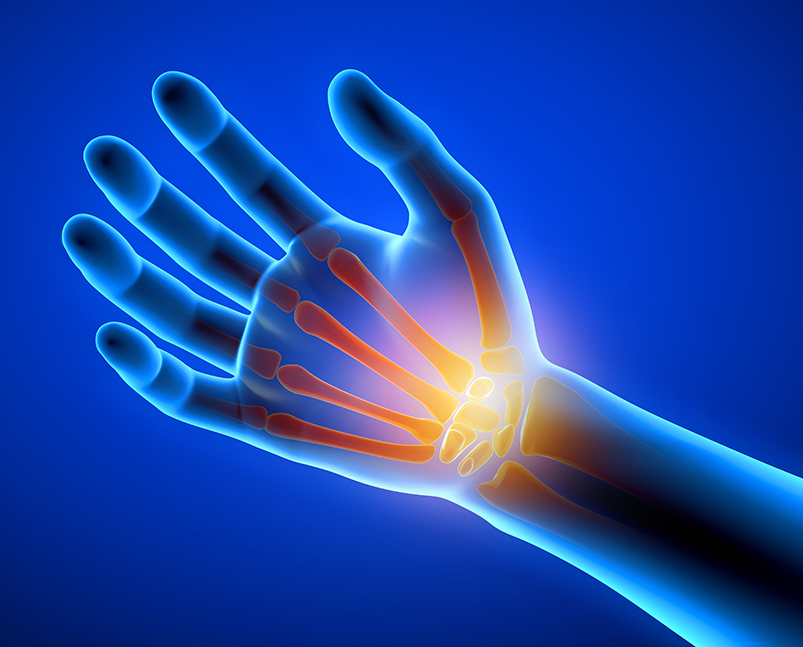
Common Signs of Thumb Arthritis
- Tenderness, swelling and stiffness in the base of the thumb
- Limited strength, especially when grasping items
- Reduced range of motion and flexibility
- Excessively exaggerated appearance of the joint found at the thumb’s base.
Common Causes of Thumb Arthritis
Thumb arthritis, a condition commonly associated with age, can also be triggered by a traumatic injury to the thumb. This injury can lead to debilitating thumb arthritis; in the case of a degenerative disorder like thumb arthritis, the cartilage that converges the ends of the bone degenerates. The deterioration causes the smooth surface to roughen, which gives rise to painful bone-on-bone contact. This friction can result in increased joint damage, including abnormal bony growths (bone spurs) along the sides of the bone. These bone spurs can cause lumps directly on the thumb joint.
Risk Factors for Thumb Arthritis
Factors that increase the risk of thumb arthritis include the following:
- Being overly obese
- Underlying genetic issues such as malformed joints and ligament laxity.
- Fractures and sprains directly impact the thumb joint.
- An inflammatory disorder like rheumatoid arthritis that affects the function and structure of the cartilage.
- Physical activities that increase strain on the thumb.
Treatment for Thumb Arthritis
Thumb arthritis is typically managed with a combination of non-operative treatments in the early stages. These may include pain relief medications and splinting. However, in severe cases where the disorder does not respond to these treatments, surgery (joint fusion, osteotomy, joint replacement, and trapeziectomy) may be necessary. It's important to understand that each patient's treatment plan is unique and tailored to the severity of the disorder.
Thumb Arthritis FAQ:
How do you diagnose thumb arthritis?
Your doctor will carefully examine the thumb for swelling, tenderness, lumps, and reduced movement. Imaging tests, such as X-rays, may be used to confirm the diagnosis, assess joint damage, and guide treatment options.
How do you know you need surgery for thumb arthritis?
Surgery is usually considered when non-surgical treatments are no longer effective. You may need surgery if:
- Pain persists despite medication, splints, or therapy.
- Thumb movement is significantly limited, affecting daily activities such as gripping, writing, or opening jars.
- Joint deformity or instability is present.
An orthopaedic surgeon will assess your symptoms, thumb function, and lifestyle needs to determine whether surgery is the best option.
Why Choose Umhlanga Orthopaedic Surgeons?

Expert Care
Patient-Centered Approach
Comprehensive Solutions