



SERVICES
Knee Conditions
Meniscus Tear
Overview
A meniscus tear, a frequently encountered traumatic injury, affects the horseshoe-shaped cartilage in the knee (the menisci). Any activity that results in unintentional twisting and turning at the knee, especially when exerting more pressure on it, can lead to a torn meniscus.
Each of the knees contains C-shaped cartilage that functions like protective cushions between the thighbone and shinbone. A tear in the meniscus can cause swelling, pain and stiffness. The most typical sign is often when you have trouble moving the knee and cannot extend it fully, which can significantly affect your mobility.
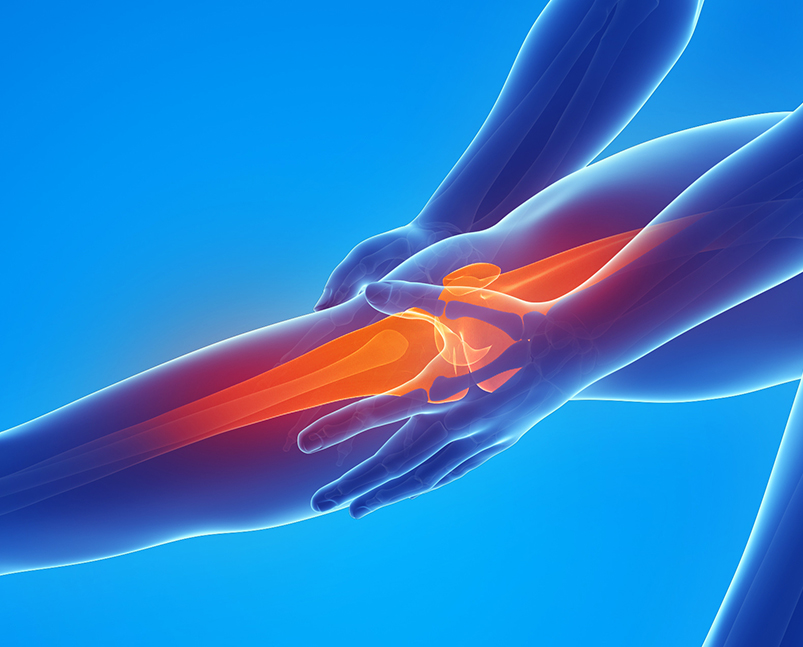
Symptoms of a Meniscus Tear
Once you experience a tear in the meniscus, symptoms can take several hours to occur. You may develop the following symptoms:
- A popping feeling
- Stiffness and swelling in the knee
- Pain when you turn or suddenly twist your knee
- Trouble straightening the knee fully
- Locked knees, making it hard to move
Causes of a Meniscus Tear
A tear in the meniscus can occur from a traumatic injury resulting in twisting and rotation at the knee, such as extreme pivots. Deep squatting or heavy lifting can also lead to this type of injury. For older individuals, degenerative changes affecting the knee can also cause a torn meniscus, even with minimal trauma or no trauma at all. It's important to understand that age can be a factor in these injuries.
Risk Factors for a Meniscus Tear
Excessive strain on the knee from consistent pivoting can place you at higher risk of a meniscus tear. This risk is generally higher for athletes, particularly for those who partake in contact sports such as basketball, tennis and soccer. These sports, due to their high-impact nature, significantly increase the risk of meniscus tears. Due to age, you can expect natural wear and tear of the knees that increases the risk of these types of injuries. Obesity is also considered a risk factor.
Meniscus Tear FAQ:
Is a torn meniscus serious?
Depending on the extent, it can be considered a serious injury. It can cause pain and joint instability.
When should I be concerned about a tear in the meniscus?
These are considered examples of signs to watch out for:
- Pain following the injury
- Knee swelling
- Knee instability
- Reduced range of motion
Do you always need surgery for a torn meniscus?
Surgery is not always necessary. The only way to be sure is to conduct a comprehensive physical examination.
Why Choose Umhlanga Orthopaedic Surgeons?

Expert Care
Patient-Centered Approach
Comprehensive Solutions